
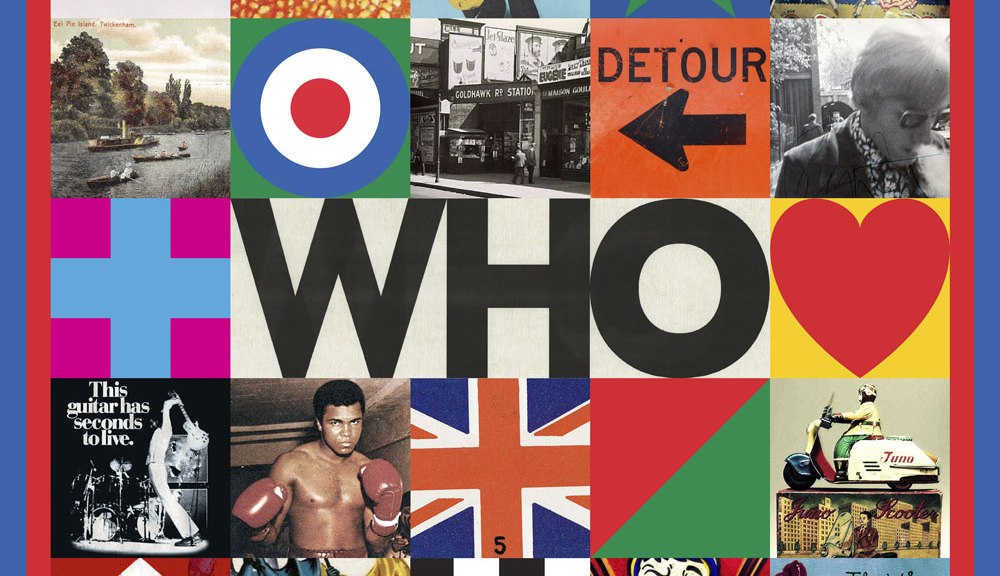
In the last month of 2019, two things that shaped who I am came to an end. One is Star Wars, the science-fantasy film saga that for decades has captivated the movie-going public; the other is The Who, the British rock band that for decades as captivated disaffected youth. With the release of Star Wars Episode IX: The Rise of Skywalker, the franchise officially wrapped up its core story, dubbed the “Skywalker saga” that details the eternal struggle between Light and Dark as seen through several generations of one intergalactic family. And with the release of The Who’s twelfth studio album Who they put the period on what is one of the most laudable careers in rock. These two endings have spurred me to reflect back how on both entities have influenced me and what their respective endings mean to the greater whole. In short, one left me feeling a little hollow, one left me feeling surprisingly fulfilled, and both left me feeling thankful.
I remember the first time I was exposed to Star Wars. My father was flipping through TV channels on a lazy afternoon, and I as a child absentmindedly sat on the couch next to him. Suddenly, the channel turned to a scene from the original film in which Darth Vader and Grand Moff Tarkin interrogate Princess Leia aboard the Death Star. Dad watched for a minute, then continued to flip through the channels. But I was transfixed. Who was that scary guy all in black armor? Why was he threatening that girl? It seemed so serious and out of context, yet that depth immediately intrigued my childhood curiosity. I couldn’t help but want to see more. I asked Dad what that was.
“It’s Star Wars,” he said. “You should watch it when you are a little older.”
For the next little while I imagined Star Wars to be this dark, mature epic that one day I would be old enough to dig into and expand my universe. Then, a couple years later, the original trilogy was re-released in theaters. We went and saw all of them, and I don’t think I have ever had a more exciting experience at the movies (besides maybe seeing The Lord of the Rings for the first time). Basically, they lived up to all of my expectations.
Star Wars introduced me not only the immediately memorable characters and exciting scenes contained therein, but was my childhood’s most concrete foundation of what a story actually is. George Lucas’s famous reliance on Joseph Campell’s theories about the archetypal hero’s journey provided a framework on which to hang a true modern epic, and I cannot overstate the degree to which exploring the world of Star Wars as a kid shaped my conception of fiction and adventure stories. Beyond that it influenced how I thought about morality and self-growth. For example, I could not conceive of the idea that Lando, who originally seems to be a “good-guy,” could sell out his friends to the Empire, then later have a change of heart and go back to help them. Before that I thought of characters as either good or bad, and seeing a moral grey-area was startling. The films’ broader themes of overcoming the darkness within yourself and becoming in-tune with the world and people around you had a long lasting impact that as I aged informed my thoughts about spirituality and ethics. Though now I acknowledge that Star Wars is, at the end of the day, “just a movie,” at the same time it isn’t. And I know that countless others across the world feel the same way.
On the other hand, I do not remember my first true exposure to The Who’s music. I’m sure I had heard them on the radio, or perhaps on TV in a commercial or the original CSI. But I did not think about them as an entity until, as a young teen, I got into music in a big way. One time, as I looked through my dad’s copy of the Rolling Stone Illustrated Encyclopedia of Rock, I turned to a picture of The Who from the 1960s. My dad, looking over my shoulder, commented on how that band had a heck of a drummer. All I could think was that the guy in the British flag jacket had a big nose.
Nonetheless, as an aspiring drummer myself, I went ahead and purchased The Ultimate Collection, the then-current two disc collection of the band’s greatest hits. That CD became one of my most-listened to over the next couple years. Yes, Keith Moon is still one of the most original and explosive drummers ever. But the strength of The Who comes from much more than that. The power and nuance in their music, more than almost any other group, fully realizes the emotional complexities inherent to growing up (at any age). Pete Towshend’s songwriting voice is so singular and pointed that, a decade and a half after first discovering them, I still find interesting nuances in his lyrics that cause me to ponder. Their best songs have a way of putting into words and music emotions that I struggle with on my own, and it feels so edifying to hear others out there share in and help express those feelings. Besides all that, they just rock HARD. Any live recordingof them in their prime reveals an energy and catharsis that still blows away practically any other group before or since.
And just like that, they end. Now I know it’s completely stupid to think that Disney will not make any more Star Wars. But based on industry buzz and the reception of the past couple films, I think it’s safe to say that we won’t see any more movies for a while. In any case, the story begun in 1977 is ended, and anything that comes next will exist in the periphery of the established 9 film canon. Likewise The Who haven’t officially disbanded, but considering that Townshend and Roger Daltrey are in their late 70s and the theme of the album is looking back at their career, it’s safe to say that this is probably their last word.
So how do these respective entities decide to close it all out?
As much as it pains me to say it, The Rise of Skywalker is just…not good. Try as director J.J. Abrams might, he just does not produce a satisfying conclusion to the saga. The reasons for this are myriad. Firstly, Abrams does not even attempt to connect his film to the previous installment, Episode VIII: The Last Jedi. That film, directed by Rian Johnson, put forth a startlingly bold and stylish take on the Star Wars universe. It was so different that many longtime fans decried it for breaking away from the series. In truth, The Last Jedi is a masterpiece. A flawed one, mind you, as it still makes several questionable narrative choices. Yet the overall theme of the film is one that’s extremely provocative and fulfilling, and more in tune with the spirit of the original trilogy. Through the film, Johnson makes the argument that the dogmatic Light Side/Dark Side argument is inaccurate: there is the potential for good and bad within everyone and every situation. It depends not only on how you use your power, but the perspective you bring to the context of any situation. The ultimate message is that anyone can be a hero – you don’t have to be a Chosen One or be related to very important people to make a difference in the world. The potential is in everyone.
But then Abrams walks back on all of that. He reveals that our hero Rey is the granddaughter of the (resurrected) Emperor Palpatine. So THAT is why she is so powerful with the Force, and that is why she is destined to defeat the Sith. It walks back on everything that the previous movie posits. Beyond the fact that it’s a much less intriguing premise, it makes for a tonally inconsistent film series that lessens the overall impact of the conclusion. The supposed epicness of the finale falls flat because it does not seem earned. The return of Palpatine and the heel-turn over Rey’s origins comes out of nowhere, so the desired emotions are not achieved by the end. Instead of building on Episode VIII’s premise and making a story about Rey overcoming the First Order and bringing Kylo Ren to the light side despite being “a nobody,” we get a story about how she is the avatar of the Force.
The story we got actually could have worked even still, if it had been fleshed out and the big moments were given time to resonate. But Abrams overstuffs the movie with whiplash action scenes, revelations, and death fake-outs that pile on each other until it becomes a blur. Much like the final season of Game of Thrones, the telling of the story is rushed and, as a consequence, weakened. In an effort to side-step his predecessor, Abrams tried to cram two films’ worth of material into one, and it does not work. What makes me so mad is that it’s clear that Disney wanted to avoid the controversy The Last Jedi engendered, so made a “safe” movie that doesn’t do enough to develop the story nor universe. I don’t need to watch wink after wink toward the original trilogy; I don’t need to be reminded of how much I love Star Wars, you already have me. Give me a good story with the great characters that you established in The Force Awakens. This isn’t a Sunday night special, it doesn’t need to be so self-congratulatory. Before the film was even released, its title betrayed the problem: it’s tethered itself to the past, and refuses to move forward. It’s the exact opposite of what Rian Johnson attempted in Episode VIII.
Positives? The actors all do a phenomenal job, and the repartie between them is super entertaining. There is a good sense of adventure in the film and Chewbacca finally gets a medal. I appreciated the humorous role of C-3PO and the addition of D-O and *BABU FRIK* was fun. It’s just a shame that it’s all squandered on a project that cares more about good press than telling an engaging story. At the end of the day it’s a Star Wars movie, and for the two hours it’s playing you’re going to be entertained. Yet I came away feeling a little hollow, especially considering that the film is posited to be the conclusion of the entire saga. With The Rise of Skywalker, Disney revealed Star Wars to be what it has been for a while, but I was too naive to believe it: a commodity to be sold.
Some disgruntled fans may say that they wish Star Wars had died before it got old, a sentiment that at one point was shared by Pete Townshend…about himself. In their iconic 1965 breakthrough single “My Generation,” the twenty-somethings in The Who proclaimed that they hoped they died before they got old in a declaration against the perceived stodginess of their parents’ generation. Of course, time has a way of marking past statements as ironic. Pete and singer Roger Daltrey are now as old as their own grandparents were when they first recorded that song. I can’t say for sure if they regret those words or not, but I can say that it seems they’ve come to terms with their place in the world. Who is an album that seems to look back at their journey, take stock of what is left, and confirm that our heroes are no less searching than they ever were.
The album opens with the wonderfully titled “All This Music Must Fade.” Essentially, Townshend acknowledges that music is ephemeral, fads come and go, and nobody likes new songs from old rock bands anyway; nonetheless, he still does what he does because he needs to express the music within him. The music is punchy and nobody hits a power chord like Townshend – it’s immediately identifiable. From there they move into “Ball and Chain,” a relatively topical song about Guantanamo Bay that stands out to me more so for the production. It’s a good song that really lifts off at the end, buoyed by some cool synthesizer work that reminds the listener how forward-thinking the band was in the early ‘70s in incorporating synths into a rock context. “I Don’t Wanna Get Wise” serves as a direct rejoinder to the first track, as well as a nod toward “My Generation,” and the track “Detour” is a wink toward the band’s original pre-Moon name: The Detours.
All of this nostalgia is a little surprising: Townshend has always struck me as rather unsentimental. From rock operas, to multimedia projects, to his notoriously caustic public persona, he always has appeared to be looking forward, striving for the next great statement. He speaks to this in the track “Rockin’ in Rage” – he knows that people see him as a misanthrope, but he is going to speak his mind. That the band acknowledges where it’s been and its legacy is refreshing, and surprisingly welcome. Of course, Roger and Pete are augmented by Pino Palladino on bass and Zak Starkey on drums, plus Pete’s younger brother Simon on rhythm guitar. Palladino and Starkey are very strong musicians who hold things down admirably, but are nowhere near the force of nature that was the classic John Entwistle/Keith Moon duo. Simon pens the song “Break the News;” while it’s not really a highlight of the album I always appreciate when other voices in a band are heard.
Ultimately, if this does end up being the last Who album, it wraps up their career very well. Their last release, 2006’s Endless Wire, has several strong moments but is a little pretentious, getting bogged down in the latter-half by Townshend’s heady opera concept. Who, on the other hand, is direct and succinct. It hints that despite all of the sturm-und-drang that has characterized their past 50+ years, they have found a sort of peace and acceptance with where they are at, which is ultimately what you want at the end of any story, be it real or fictional.
So that brings us back around to Star Wars. We have a franchise that, in its final chapter, spent so much time looking back at itself that it didn’t do anything with the story it was telling in the present. They built up a supposedly big conclusion but didn’t deliver. The Who, on the other hand, could have never come out with new music again and their legacy would not be affected. Yet they followed the songs in their heads and put out a surprisingly satisfying epilogue to their career. No matter how I feel about the end of Star Wars, I’ll always have the other great movies and stories to enjoy. The universe is still there to explore and nothing can take away its fun and excitement. Likewise, I can now go back and listen to The Who’s earliest material and appreciate the full arc of their journey and growth. After all this timel, these two things that I love have lessons to teach me: don’t concern yourself with what everybody wants you to be or what will please the most people. Stay true to yourself and what you want to do, and that will bring the most fulfillment in the end.
 Then Play On