

I recently had a conversation with my brother about the best Weezer album (because that’s what brothers do during quarantine). That turned out to be a pretty easy decision, but looking at their discography is like looking at the best and worst of alternative rock. Weezer is an interesting band. They burst upon the scene in the mid-90s with immediately catchy songs that gave voice to every dorky kid in the nation. And the thing is that they rocked pretty hard too. Rivers Cuomo is one of the best melodicists of the past couple decades, and has a naturally great singing voice to back it up. He and Brian Bell’s guitar playing nods toward both 70s hard rock and classic power pop, and the band has a uniquely quirky sense of humor about themselves that is undeniably endearing.
At the same time, those very same positive qualities often produce truly baffling music. At some point Rivers decided he wanted to be a pop star, and their music took a noticeable turn toward the lightweight. His songwriting became more superficial, losing the honesty that makes their best stuff so worthwhile. And their humor just began to come off as cringeworthy, like they were trying way too hard.
As such it has become fashionable over the past few years to dismiss Weezer. And yet… they’ve kind of undergone a late career renaissance, consolidating their musical identities into one that is different, yes, but also entertaining. The story of Weezer is what you expect from a bunch of geeks who become rock stars: they constantly veer from reacting to critical perception to sticking to their guns, experimenting yet trying to honor their classic sound.
So, in anticipation of their upcoming 15th (!!) studio album Van Weezer, which explicitly promises to be more metal influenced, I’m taking a deep dive into their back catalogue to rank their stuff from worst to best. The first few and last few entries were extremely easy, but things got messy in the middle. Just like Weezer.
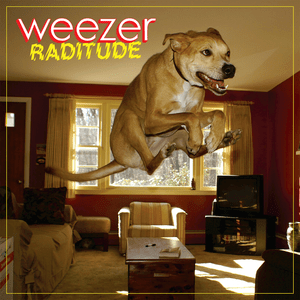
14. Raditude (2009) – Not only Weezer’s worst album, this may actually be one of the worst rock albums of all time. Riding high off of the commercial success of the Red album, the band got lost in their own hubris. Starting with stupid cover art and going from there, the record is a tonal mess, and lyrically it feels cheap. Rivers sings about partying and going to the mall, which sounds weird from a middle aged man; he also sings about the stresses of domesticity, which sounds hollow coming from a rich and famous rock star. It’s clear that he’s shooting for mass appeal, but in doing so completely forsakes everything that makes them interesting. Let’s not even get into the embarassing Lil Wayne feature “Can’t Stop Partying.” Everything else on this list is much, much better than Raditude; it actually made me a little ashamed to be a Weezer fan for a while (I got over it). Ironically, it does contain one clear greatest hit in “If You’re Wondering If I Want You To (I Want You To),” easily the best on the album and arguably one of the best of their career. Such is how it goes with Weezer.
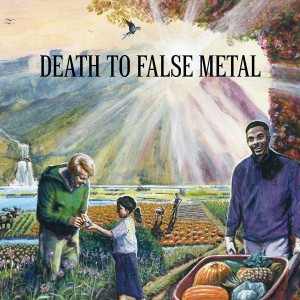
13. Death to False Metal (2010) – Technically this is a compilation of B-sides and unreleased tracks, but it feels like a self-contained album, all songs boasting the production sheen typical of the band at the time. It’s not a bad listen per se, but most of the songs are forgettable. The only standout is their cover of Diane Warren’s “Unbreak My Heart,” a harbinger of things to come.

12. Weezer (Teal Album) (2019) – With the Teal album, Weezer fully embraced their status as a meme, leading off their cover album with their memed version of Toto’s “Africa,” itself a played out meme over the past few years. Full disclosure: I absolutely hate Toto’s “Africa,” so I really get no joy from Weezer’s version either. Beyond that, they actually do a pretty good job on the other covers, sticking to faithful renditions full of energy and love. It’s a fun release and a breezy listen, although it’s nature as a cover album of all pretty famous songs make it relatively inessential in the overall arch of the band’s story.
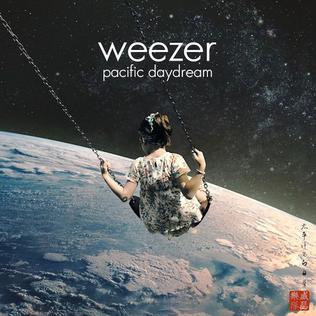
11. Pacific Daydream (2017) – This one went under the radar upon its release. That’s understandable, as it lacks the musical punch indicative of their best work. It calls on the sounds of 80s pop to conjure a faux-nostalgia about good times gone by. I don’t understand why they felt the need to take this production approach, when they were on the cusp of a critical recovery after a couple well received releases. Lyrically, though, Rivers digs into the study of nostalgia in a way that’s sort of intriguing. In that sense it actually holds together as a kind-of-concept record. On single “Beach Boys” Rivers sings about how loving the band shaped his outlook, and how hearing them takes him back to when he was first getting into them. Of course, the music sounds nothing like The Beach Boys, which creates a strange but not unwelcome juxtaposition. Music and taste may change, but those memories and sentiments remain. Kind of like Weezer.
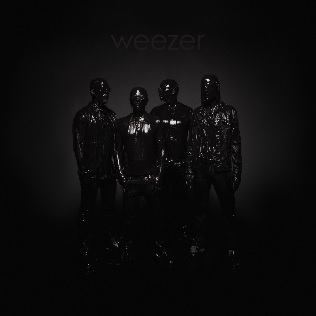
10. Weezer (Black Album) (2019) – The latest in Weezer’s color-coded line of self-titled albums is far and away the weirdest entry in their catalogue. Primarily keyboard based, with guitar mostly providing texture, Black is also the first Weezer album to contain cursing (gasp!). The band was upfront in saying it’s intentionally experimental, and as such it’s a qualified success. It’s not necessarily gloomy or heavy, but there is a darker undertone to much of the music and lyrics, making it a good nighttime listen. Since it’s their most recent I admit I need to revisit it, but I enjoyed it upon my initial listen.The hooks are less immediate and the melodies a little more tricky; this may shape up to be Weezer’s “grower” album. Or it may just be an odd footnote. It’s good to see a long-tenured band try new stuff; even if it’s not their best ever, it’s respectable.
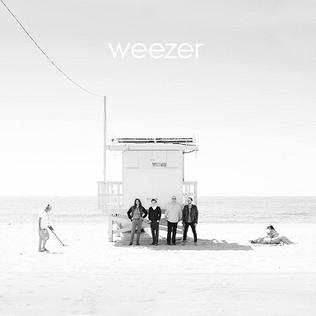
9. Weezer (White Album) (2016) – The follow up to their successful comeback album, White is the best distillation of modern, late-stage Weezer. It was beloved by critics, and seems to already be gaining a cult following. Reportedly inspired by Rivers’ trips to the California beaches around his home and observations of the people encountered there, the songs are undeniably well constructed, and it really does highlight how great of a pure songwriter Rivers is. It also showcases the fusion of alt-rock and modern pop that the band has strived for for so long. Late-album highlight “Jacked Up” is my favorite, the chorus is just undeniable. That said, I place it at number 9 on this list just because, frankly, it doesn’t do it for me like their earlier, classic work. That’s not a sin, but this isn’t the record I’m going to put on to introduce someone to the band.
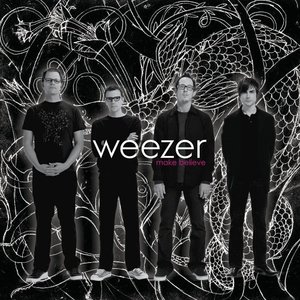
8. Make Believe (2005) – Make Believe was my first exposure to Weezer, as it was for many people my age. Blame massive smash hit “Beverly Hills.” As such, the album holds a certain special place in my heart that protects it against some contemporary criticism. People claim it is overproduced and a move towards the campy songwriting that would come more pronounced in later years. This is all true, I suppose, but many of the songs still stand up on their own merits, and “Perfect Situation” is one of their very best. Recent listens do reveal a release that gets bogged down in production dross as it goes long, and it could probably stand to be trimmed by one or two tracks. Yet as Rivers likes to note, nostalgia is a powerful thing, and such an iconic generational reintroduction has to be given its due. It’s fitting that Make Believe sits in the middle of this list, as it’s essentially the divider between “old” and “new” Weezer.
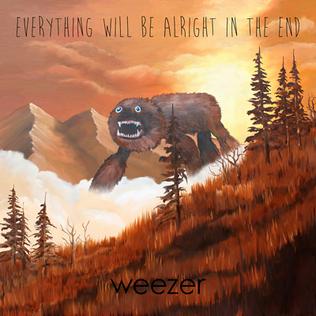
7. Everything Will Be Alright In the End (2014) – It’s hard to believe that Weezer’s “comeback” album is already 6 years in the rearview mirror. Yet at the time it really was received as a return to form after several albums of varying quality. Guitars are chunky and the drums are pumped up to the max. Lead single “Back to the Shack” is an explicit address to all the criticism heaped on the band, with Rivers essentially saying that people are right and he got sidetracked with pop aspirations. The rest of the album does seem to lean toward a reconsolidation of everything they do best: guitars, introspective lyrics, and strong melodies. There’s some surprises too, like the eminently enjoyable “Go Away,” which features vocals by Best Coast’s Bethany Cosentino. There’s also the three-part closer “Futurscape Trilogy,” which builds from a big intro, through a solid song, and ends with intertwining guitar solos that reach for the rafters. Not on par with the absolute classics to come on this list, but this is the sort of record that Weezer should have been making all along. It’s heartening to see that they still got it in them, but also perplexing as to why they haven’t returned to this sound since. I guess you can’t fault one for following the artistic muse.

6. Hurley (2010) – This may come as a surprise to readers, as Hurley is often dismissed as one of the band’s weaker efforts. This is unfair, as it’s actually one of the most underrated albums out there. Much of the flak probably comes from the hangover from the previous year’s terrible Raditude, and the seemingly tossed-off nature of this album. It’s short, and the cover and title devoted to the Lost character is random to the point of meaninglessness. I’ll admit that I was indifferent at first, yet over time revisited it more often. It’s a tight album. It’s much more consistent than Raditude or more recent albums lower on this list, and while not the “heaviest” in their discography, I think it’s a very fun little pop rock record. True, Rivers isn’t swinging for the fences in terms of lyrical profundity, but again, no one said that a fun little pop rock record has to be a grand statement. In a way, it’s a spiritual successor to the next addition to this list. With some distance hopefully it’ll gain a cult audience as well. Or maybe I’m just a sucker.
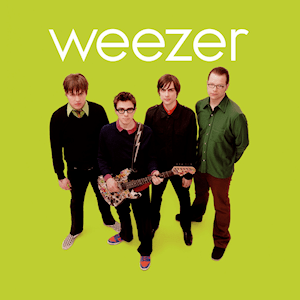
5. Weezer (Green Album) (2001) – Here we go. The classics. After a hiatus in which the band considered calling it quits, Weezer’s third album is their shortest release. It’s also their only album with bassist Mikey Welsh. Some longtime fans were upset upon its release because it contains only straight ahead pop songs. But that’s exactly the point. Here, they perfect the notion of pop-rock with ten songs of hook after hook and riff after riff. Legend holds that the negative reaction to their previous Pinkerton scared Rivers away from writing personal lyrics, so he latched onto more vague topics with a broader appeal. In retrospect that’s fine when each song is so to-the-point and perfectly crafted. It also contains two of their biggest hits with the eternal summer jam “Island in the Sun” and the heavier “Hash Pipe.” Its success convinced the band to stay with it for the long haul, and for better or for worse, I’m glad they did.
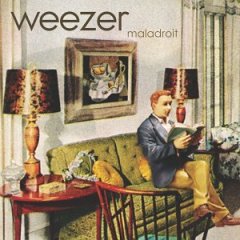
4. Maladroit (2002) – Maladroit is kind of the dark horse of Weezer’s discography. It had some hits when it came out (“Dope Nose” and “Keep Fishin’”), but your average fan nowadays isn’t going to recall many of them. That said, this one rocks. It’s by far their hardest album, while still maintaining the catchiness that’s their trademark. There’s not much to say overall, but it just sounds good. It’s the band cutting loose after massive success while breaking in their new bassist Scott Shriner. If you are looking for a Weezer album with some grungy jams and gnarly riffing, this is the one.
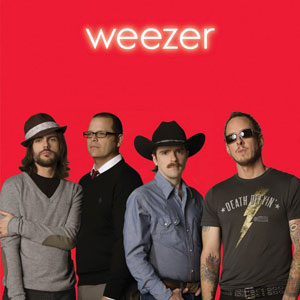
3. Weezer (Red Album) (2008) – Where to start with an album like Red? This is a group consciously growing up and taking risks, and by and large the risks pay off. It sees a return of Rivers’ inward-looking songwriting, except the years between Red and Pinkerton have changed his perspective. Where once we had a confused, neurotic young man who couldn’t express himself but through song, we have a more self-assured, yet still introverted, adult who is confident in his abilities. We hear him take stock of where he is now and feel pretty good about himself for once. And his abilities don’t let him down. Besides the mega-hit “Pork and Beans,” (written because the record label said they didn’t hear a commercial hit on the album), we get the band stretching. “The Greatest Man That Ever Lived (Variations on a Shaker Hymn)” takes the core melody of “Simple Gifts” and warps it into various homages to the band’s influences throughout time. It’s a fun song, sort of their own “Bohemian Rhapsody,” and holds together despite its potential ungainliness. If that was it, then this record would appear lower down the list, although still in the top half. But on the second half we are treated to three songs written and sung by the other members of the band, a first for them. Drummer Patrick Wilson turns in a great rocker with “Automatic,” and while Shriner’s “Cold Dark World” is a little less memorable, Brian Bell’s “Thought I Knew” reveals a competent songwriter whose voice kind of reminds me of George Harrison. These twists add a great deal of variety to the record, and go a long way in cementing the idea of Weezer as a band, not just a vehicle for Rivers Cuomo.

2. Pinkerton (1996) – The band’s second album is the second of their two undeniable, all-time great records. Although it’s very different than their debut. Pinkerton is an intensely personal and troubled record, with Rivers spilling his guts about adjusting to fame while still unable to figure out relationships and find happiness. The music follows suit. It’s full of guitar squalls and feedback, crashing drums and discordant shouting. It all adds up to be their heaviest record, both musically and emotionally. “Tired of Sex” is a cathartic opener, “Why Bother?” contains one of my favorite guitar solos, and “Pink Triangle” is probably the best song about falling in love with a lesbian yet written. The best song, however, is “El Scorcho,” which captures all of the pent up frustration, lackadaisical resignation, and bewilderment of a collegiate crush. Then, it all resolves with “Butterfly,” the beautiful acoustic number that leaves Rivers with, if not closure, then a moment of self-realization. To be clear, the whole does not paint an entirely flattering picture of our narrator, as he obsesses over women and seems unable to take responsibility for his actions. Yet the emotions and strife expressed within are relatable to everyone at some point as they grow up, and when channeled through songs this good, it’s hard to resist. The melodies are still there, and alongside such (comparatively) harsh playing, it creates a sort of sweet release. Critics panned it in 1996, leading to a loss of self-confidence in the songwriter. The band took a 5 year hiatus during which Rivers attended Harvard and founding bassist Matt Sharp left for good. When they reunited, they stayed away from such personal topics for a while. But as time has gone one Pinkerton’s stature has grown considerably, to the point where it’s recognized as a pillar of 90s emo. In a sense, everything the band has done since has been unfavorably compared to it, but those comparisons are unfair. Such a real record can only be made once, by certain people at a certain point in life, and as such it can’t be reproduced again. That’s okay though, because we already have it.
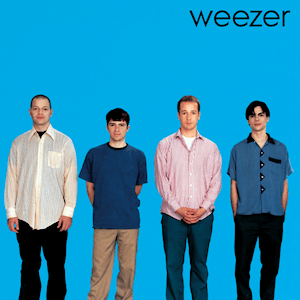
- Weezer (Blue Album) (1994) – You knew this was going to be here. How could it not be? It feels like a greatest hits album in-and-of-itself, but thankfully it’s so much more than that. Produced by The Cars’ Ric Ocasek, it shares that band’s perfect mix of crunch, melody, and nervous energy. Unlike The Cars though, it lacks the 80s sheen and instead is all mid-90s alt-rock guitar. It’s surprising to revisit it and hear how great much of the guitar is, betraying the band’s love of hard rock. But what really sells it is the singular songwriting. The lyrics are personal yet relatable, talking about jealousy (“No One Else”), shyness (“Undone [The Sweater Song]”), and looking past stereotypes to find a kindred spirit (“Buddy Holly”). Then of course there’s “Say It Ain’t So,” in which Rivers examines his issues with an alcoholic parent and past abuse. Despite the troubled subject matter, the band plays with catharsis and ultimately triumph, like despite it all, we keep rocking on. Maybe it’s because they have a place of refuge: in this case, “In the Garage,” where they can get together with friends, listen to music, read X-Men, and play Dungeons and Dragons. It’s a sentiment that can be shared by many – all those times as a teenager hanging with friends, doing nothing in particular. Yet it’s those times we look back at wistfully. Instead of Kiss, I had Led Zeppelin. Instead of DnD, I had Zelda. And I had Weezer, who identified with my teen awkwardness. I think there’s a reason that, when people talk about Weezer, they refer to their frontman by his first name. He doesn’t seem like some god above all us mere mortals, or some eccentric genius who is destined to enter a pantheon of Great Artists. He is just a guy, a nerdy guy at that. And that gives nerds everywhere the hope of living out their rock star dreams.
 Then Play On
One thought on ““Fashion Sense Is a Little Whack:” Ranking The Weezer Discography”