
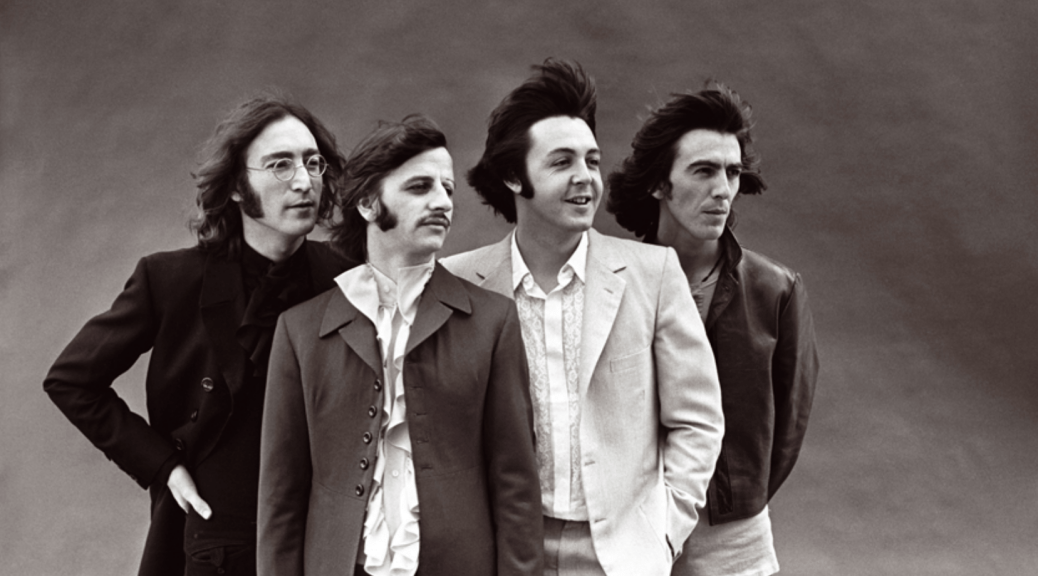
This weekend was my thirtieth birthday. Before looking forward at what is to come, I took a moment to look back at what has come before. It’s fitting that I return to that which got me started. The Beatles and Beethoven were the bedrock of my exposure to music, so it’s fitting that I go back to them and get into doing what I’ve most enjoyed about this blog: making lists. Here’s my ranking of Beatles albums.
What can I say about The Beatles that hasn’t already been said? Nothing, in fact. There has been no more universally lauded “pop” group over the past half-century than the Fab Four from Liverpool. When it comes to commercial success, critical acclaim, and lasting influence, no one surpasses John, Paul, George, and Ringo.
So I won’t try. It doesn’t matter if I go into the myriad of ways that their production innovations changed the conception of rock music forever, or how their sense of style literally shaped culture’s broader conception of fashion and “cool” to this day. It seems like they’ve been so incorporated into the broader societal consciousness that it’s taken for granted now, or people don’t really consider them as a concrete entity anymore. The Beatles are an archetype and an ideal, a cliche if we are being ungenerous. Yet at the end of the day we still have the songs, and they still stand up as some of the best ever written.
I grew up with The Beatles. My father has been a huge fan since the 60s, so their music was a part of my life from day one. As a kid I’d stare at his giant Sgt. Pepper poster in the den, mesmerized by all the colors and faces. It seemed a little beyond my depth. Later, I’d play with the Yellow Submarine action figures (complete with Blue Meanie). While I knew some of the songs, I didn’t really delve into the music until I was a teen. But it had surrounded me already, and laid the foundation for how I perceive music generally. So I’m clearly biased when I talk about the band, but I’m also not alone. The world is filled with a seemingly universal love for the lads from Liverpool. They synthesized the best elements of classic American rock n’ roll with British music hall and did it right. Even with all of the great stuff that has been made since 1970, they wrote the rulebook, and there’s a broad appeal to their sound. Even if you don’t like them, you probably like at least one song by them.
When I listen to them now (which isn’t that often, given all the other music out there to enjoy), I am continually impressed by just how great everything is. The lyrics, the melodies and the instrumentation are truly a step above most everyone else. Their songs are the most fun to sing along to, and have provided countless moments of joy and comfort, not just for me, but to people all over the world.
So without further ado, here’s my album ranking. Why? Mostly for my own edification and enjoyment. But also, thinking through their stuff may help illustrate just what makes them so magical, and give those curious some reference points with which to start.
Note: I’m going to only cover their completed studio material, so no live albums (Live at the BBC, On Air, Live at the Hollywood Bowl, and Live at the Star Club in Hamburg Germany), remixes (Love), or the Anthology series of studio outtakes and alternate versions. That would be insane, even for me. That said, if you are a fan, all of the above mentioned releases are a joy to hear.
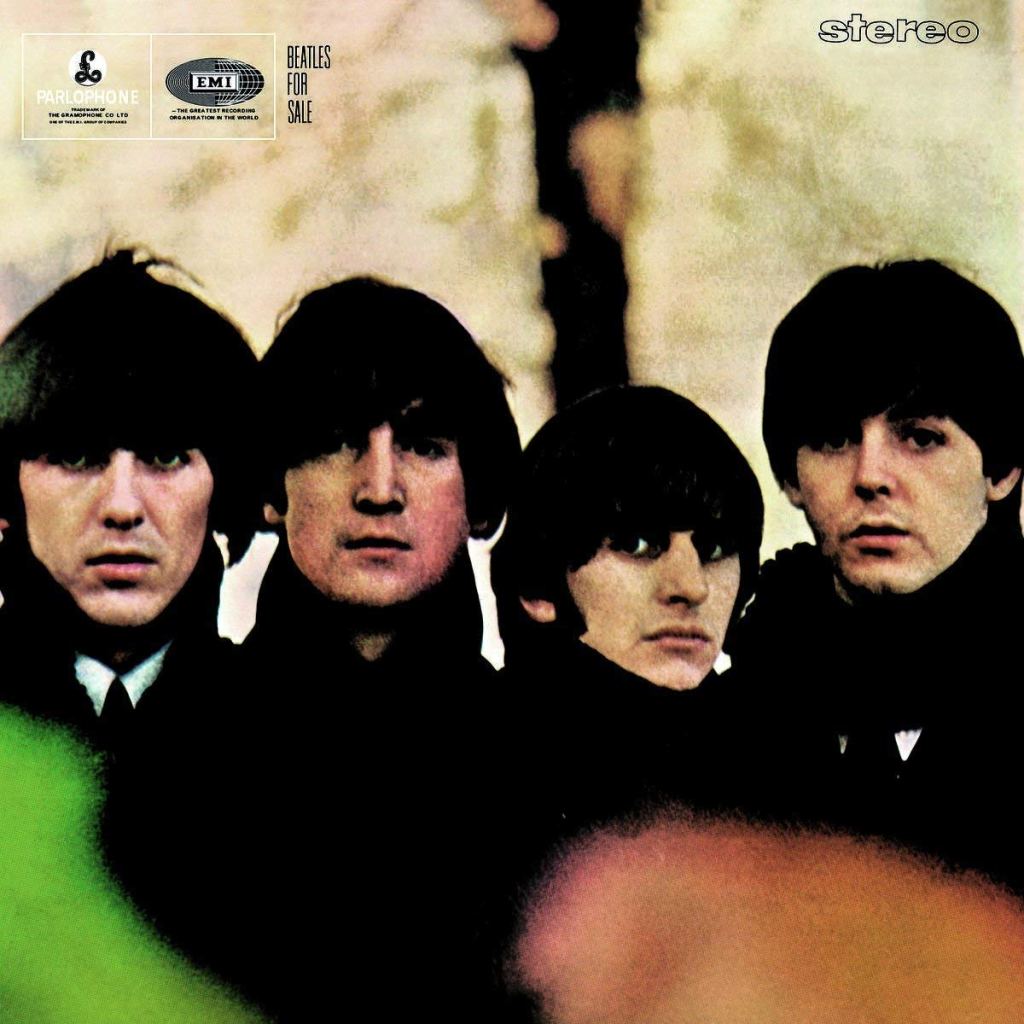
15. Beatles For Sale (1964) – It’s been said that the worst Beatles album is still better than almost any other band’s best, and while that’s not true, the core point comes through. Beatles For Sale is not not a BAD album, per se, it’s just not quite as good as everything else. There’s still good stuff on here: “Eight Days a Week” is one of their all-time classics, and “What You’re Doing,” “Every Little Thing,” and “I’ll Follow the Sun” are all stellar tracks. Furthermore, “No Reply,” “I’m a Loser,” “Baby’s In Black,” and “I Don’t Want to Spoil the Party” reveal John Lennon beginning his more introspective (you could even say pessimistic) songwriting voice that would be developed more fully later. So what puts For Sale so low? Well, the rest of the album is filled out with some of the most lukewarm work of the band’s career. Considering the previous A Hard Day’s Night was all originals, it’s a little disheartening that For Sale has so many covers. Word is that the lads were worn out from the constant toil of Beatlemania, and were scraping the bottom of the barrell for this one. The title slyly belies the feeling of being exploited as a commodity by the record industry. All the covers sound stiff and by the numbers, with the exception of Paul McCartney’s energetic reading of “Kansas City/Hey Hey Hey Hey.” Special shout out to the abysmal “Mr. Moonlight,” a cheesy song which John over-sings. I must say, though, that Ringo Starr’s exhortation to “rock on George, one time” before the guitar break on “Honey Don’t” is a great reminder of the fun and showmanship that never went away, even during the weariness of late ‘64.
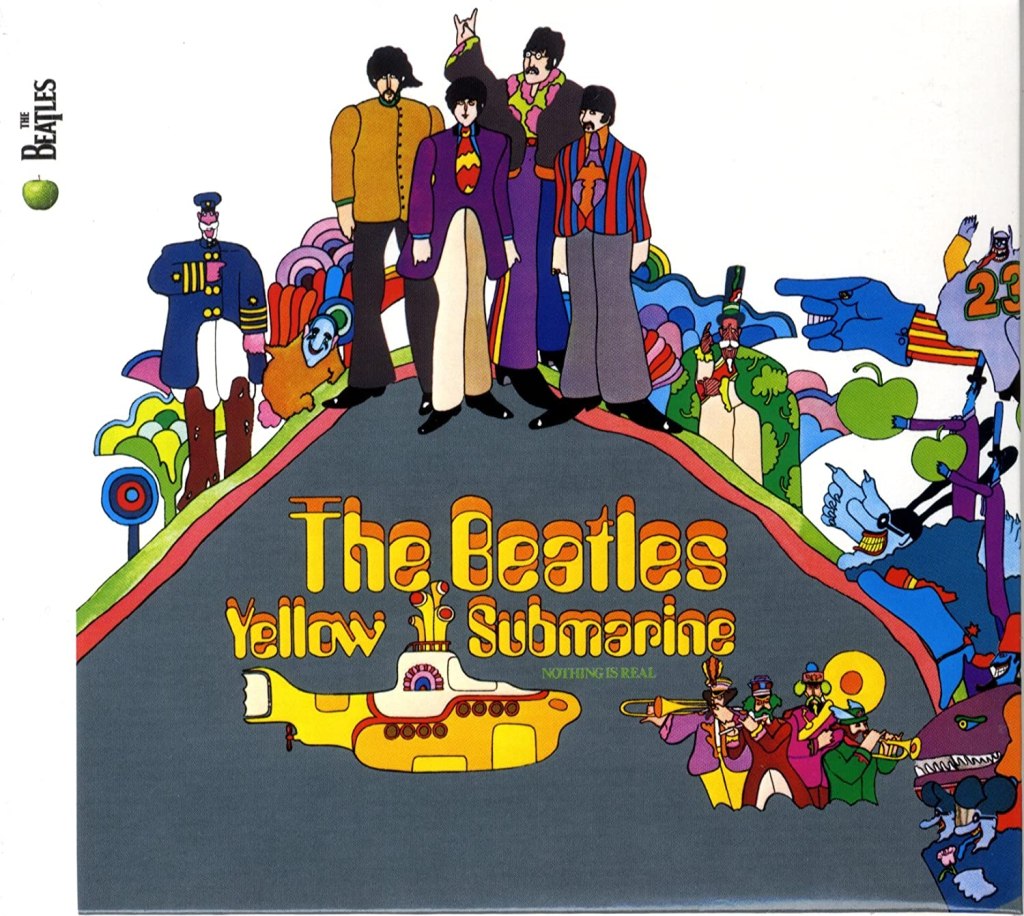
14. Yellow Submarine (1969) – This is the most inessential Beatles album. Two of the songs (“Yellow Submarine” and “All You Need Is Love”) had already been released elsewhere, and the second half is taken up by George Martin/Paul McCartney orchestrations that served as the actual soundtrack for the Yellow Submarine movie. The orchestrations are interesting to hear once or twice, but they are not a draw for repeat listens. What is a draw for repeat listens are the 4 other songs seeing the light for the first time here. John’s “Hey Bulldog” is a rocker with a great riff. Paul’s “All Together Now” is slight and cloying, to be sure, but the knocked-off jingle is just another of the countless examples of his effortless melodicism. The main attractions, though, are the TWO George Harrison songs, and they are stunners. First we have “Only a Northern Song,” which is a very quirky psychedelic song in which George sardonically laments how his creative input is downplayed by the rest of the band and management. Then there is “It’s All Too Much,” which can only be described as epic. It’s a love song that builds through almost 7 minutes with searing guitar leads and swirling technicolor production. I was blown away the first time I heard it. It’s one of the most underrated Beatles songs for sure, and is almost enough by itself to bump Yellow Submarine above For Sale
13. A Hard Day’s Night (1964) – An early fan favorite, The Beatles’ third album A Hard Day’s Night is the first to contain all original songs. For this fact alone it has to be respected, but at the same time the band was still developing their chops and the songs simply don’t hold up to what would come in the future. Of course it’s an entirely fun listen, but some songs on the second side blur together and closer “I’ll Be Back” contains the laughably bad line “I’m gonna love you til the cows come home.” (Really, John? You couldn’t think of anything less awkward to say there?) At the same time, this still has the title track – one of the greatest album openers ever – and “Can’t Buy Me Love,” which contains one of my very favorite guitar solos.
12. Past Masters, Volume One (1988) – The Past Masters albums are compilations of all the stand-alone singles, B-sides, and EPs released over the course of The Beatles’ career. The record industry of the 1960s had not yet solidified around the LP as the primary source of music distribution (a trend that The Beatles themselves helped change). As such there are many essential tracks that do not appear on proper albums, and the Past Masters are must-haves. Volume One chronicles their career from 1963-1965, what can be described as the “mop top years.” Most of the songs are pretty standard 60s rock songs, albeit some of the best constructed and performed. It’s striking how much harmonica John plays on many of these songs, a trait that he quickly moved away from. It contains “I Want to Hold Your Hand” and “She Loves You,” perhaps THE definitive singles of their early career. The collection does lose points for the German language versions of these two songs, which sound redundant. But there’s also “I Feel Fine,” the first intentional use of feedback in a studio rock song (and one of my personal faves). Overall, it’s straight bangers.
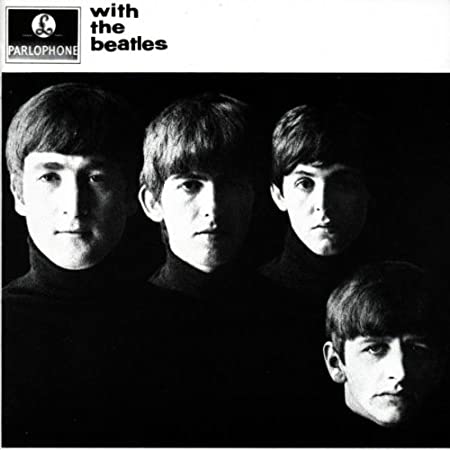
11. With The Beatles (1963) – The Beatles second album (which was released as Meet The Beatles in the U.S.) has one of the most iconic cover photos of all time. The portrait of the band’s faces half-shrouded in black is stylish and, at the time, allied them with the underground art scene popping up in places like Germany and New York. Beyond the cover, With The Beatles is giddy fun, to me the best encapsulation of Beatlemania as it crested over the Atlantic. Where to even begin? “It Won’t Be Long” is a rush, and already demonstrates John’s love of wordplay. “All My Loving” is two-minutes-and-seven-seconds of pure joy that builds to be, to this day, perhaps Paul’s greatest achievement. Check out the guy in this video who breaks down in tears to the song as Macca performs it at a 2000s concert. So much emotion and memories in every note. Elsewhere George turns in his first songwriting credit with “Don’t Bother Me,” (a mission statement of sorts), and rocks out on Chuck Berry’s “Roll Over Beethoven.” Finally, Ringo brings the ruckus on “I Wanna Be Your Man,” which, while not as dirty as the Rolling Stones’ version, still gets the job done. Finally, their version of “Money (That’s What I Want)” is perhaps the heaviest that early 60s rock ‘n roll got. Overall this release is actually one of the best introductions to the band, as it showcases their iconic British Invasion days, touches on all of their songwriting ticks, and highlights some key influences.
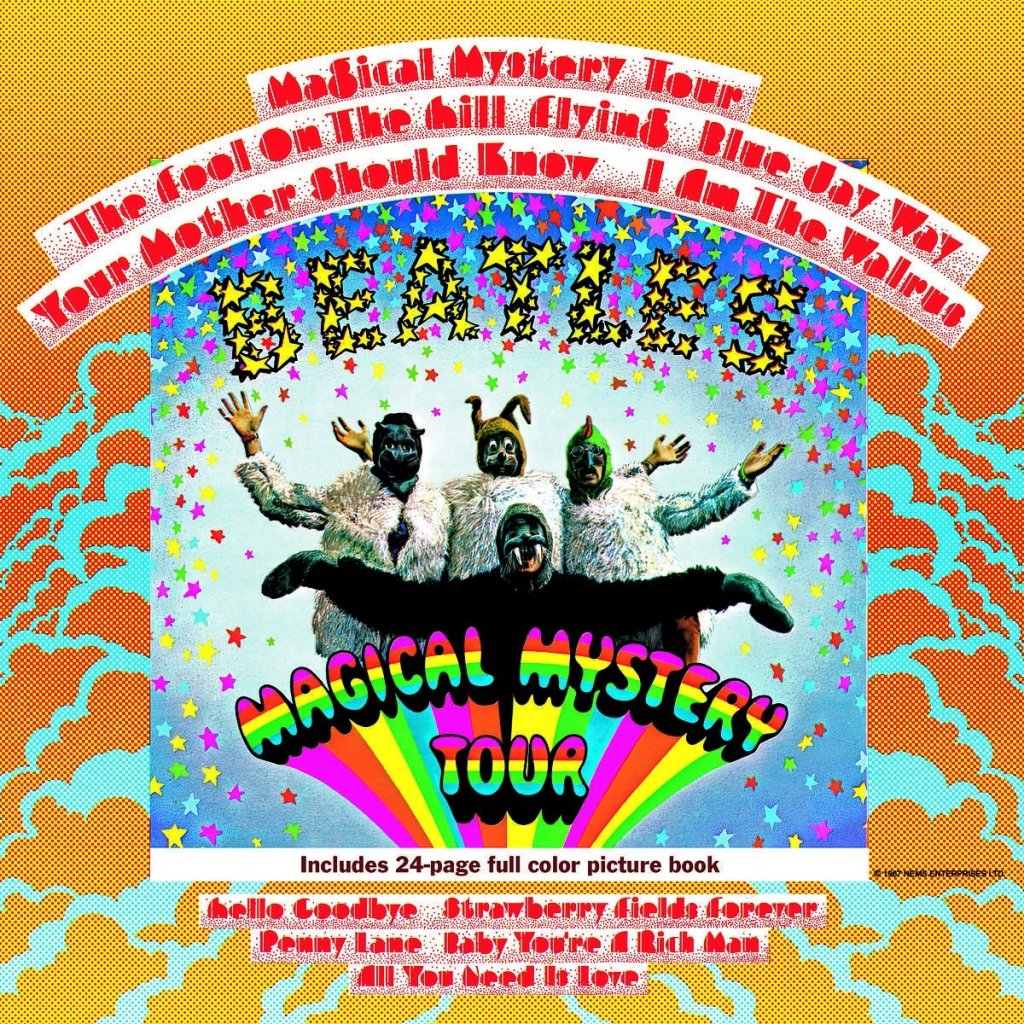
10. Magical Mystery Tour (1967) – Magical Mystery Tour is by far The Beatles’ most psychedelic release, even compared to other records from the time period. Where many artists take psychedelia to an inward, distorienting place, The Beatles’ brand was always bright and welcoming, and nothing exemplifies that better than the opening title track. It’s a kaleidoscopic invitation to come along for the ride. Paul is all over this album, with the wonderfully melodic “Fool On the Hill,” the eternally optimistic “Hello, Goodbye,” and “Penny Lane,” the iconic ode to his home neighborhood. John is not as prominent, but he makes his mark. “I Am the Walrus,” of course, is famous as one of the most trippy songs ever made, an endlessly interesting stream of surreal images and wordplay. But let us not forget “Strawberry Fields Forever.” Personally, “Strawberry Fields” is one of my favorite Beatles songs. John also pays homage to his home neighborhood, but instead of Paul’s cheerey slice of life, he instead looks back through the haze of years with longing. The music is similarly layered and mystic, ebbing and flowing to create a truly magical slice of the mind. Overall Magical Mystery Tour doesn’t hold together as consistently as other albums that appear higher on this list, but if you want to hear what people mean when they say The Beatles were “far out,” this is the one to look to.
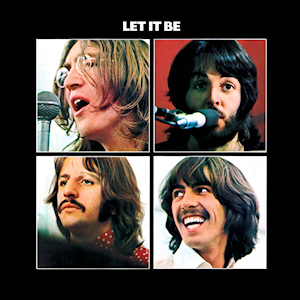
9. Let It Be (1970) – The last Beatles album released, Let It Be was not the last recorded. However it was their most difficult, and can be seen as the straw that broke the camel’s back. The members were not getting along. They constantly bickered over the direction of the music, managerial issues, and even personal gripes. They had been in too close a proximity for too long, and just needed some time apart. As such, the sessions fell apart before production was finished, and the tapes sat in the vault for a year before seeing the light of day. Even though the band did not officially break up until after its release, it’s easy to see this as an epitaph of sorts. The cover is formal and dour, and the music within sounds worn. However, it’s a good kind of worn, the kind that lends rock its swagger and authenticity. It was conceived by the band to be a “back to basics,” and as such is the most direct album they’d put out in a while. Despite the circumstances surrounding its creation, there are some great songs on here. Principal among them is the title track, which has become an anthem. Here it appears with a different (and much better) guitar solo than the more familiar single version. Other great tracks are “Across the Universe” and “I’ve Got a Feeling,” which is to me the last flourish of the Lennon/McCartney songwriting team in all its glory. This is the only Beatles album not produced by George Martin; Phil Spector handles this one, and dresses it up in his signature Wall of Sound. Many people dislike the final mixes; in fact, Paul recently re-released the record as Let It Be: Naked with the strings and horns stripped away. But I for one like Spector’s production here. Not only are they the most familiar versions, but Spector’s flourishes add a sense of grandeur that, for better and for worse, makes it their most ’70s sounding album. Let It Be is also unique for consistently incorporating an outside musical collaborator: keyboardist Billy Preston plays on almost every track here. Preston’s presence underscores the fact that many songs were recorded live-in-the-studio. In fact, the version of “Get Back” is taken from their famous rooftop concert. It ends with John smirking “thank you very much, I hope we passed the audition.” He knew just as well as everyone else that they had.
8. Past Masters, Volume Two (1988) – The second volume gets the jump over the first simply because by 1966-1970 the band’s songwriting had advanced to a point where everything they did was boundary pushing. Taken as a whole, Past Masters is a great illustration of just how far The Beatles travelled in a pretty short time. Naming stand-out tracks is close to impossible, as every single here is legendary. I mean, come on: “Paperback Writer,” “Lady Madonna,” “We Can Work It Out,” …literally it goes on and on. Of note is “Rain,” which Ringo considers to be his best drumming, and it’s a very cool song. Oh yeah, anyone ever hear of a little ditty called “Hey Jude?” Don’t sleep on this just because it’s not an official album, it contains some of the best music ever. The only reason I place it at #8 is because it is not a true album; that would be a little unfair. Oh, also, the final song on here is “You Know My Name (Look Up My Number),” which is notable for two things: it features the Stones’ Brian Jones on saxophone, and, while clearly a lark, is still the worst Beatles song by far.

7. Rubber Soul (1965) – Here we are in the top half of the list, so everything is legendary status. Many people view this at the band’s Great Leap Forward. I actually think that came one release earlier, but more on that later. Rubber Soul is certainly the most mature album up to that point in their career. The lyrics are what make this one shine – all three songwriters engaged in much more nuanced examinations of love, relationships, and their perspective of the world. They backed up these revelations with more complex songwriting and new musical ideas. Namely, “Norwegian Wood (This Bird Had Flown)” is the first use of a sitar in Western pop music, which opened the door to continued experimentation throughout the decade. The best song is “In My Life,” an extremely affecting look at a new love in relation to people and places from the singer’s past. Admittedly, there are some aspects of the record that rub me the wrong way. The harmonies in “The Word” sound shrill. Closing number “Run For Your Life,” which features the key line “I’d rather see you dead, little girl/than to be with another man,” is extremely off-putting, especially in light of the less savory aspects of John’s personal life. Yet overall Rubber Soul is a very warm record, and one that I have turned to for comfort many times.
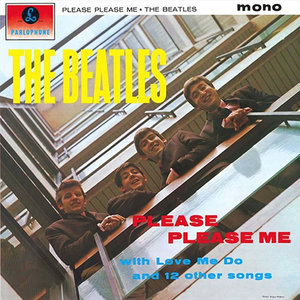
6. Please Please Me (1963) – This is the shot heard round the world: the first Beatles album. I think this one goes under the radar because it’s so old and relatively basic. But this is a great album. Truly, this more than anything is a time capsule of what rock & roll was to the four band members before they blew past all genre boundaries. From the get go, it’s amazing how fresh it still sounds. Yes, half of the songs are covers, but the band performs them with aplomb. John turns in one of his best vocal performances on “Anna (Go to Him),” Paul gets his shmaltz on with “A Taste of Honey,” and Ringo engages in some fun gender-bending on “Boys.” Then there are the originals. First of all “I Saw Her Standing There” is hands down one of the best rock songs ever recorded, period. Everything about it, from the count in, to Paul’s shouting delivery, to George’s ripping solo, is just perfect. THIS is what rock is all about, and from that point forward there was no looking back. Unlike many other white “rockers” in the early Sixties, The Beatles played with energy and irreverence. Both the title track and first hit single “Love Me Do” cement the fact that these guys are heads and shoulders above their peers. To wrap things up, the lads pull together after a marathon recording session (did I mention that the entire album was recorded in one day?) and deliver their version of “Twist and Shout.” John takes one for the team and tears out his vocal chords in a performance for the ages. To hear The Isley Brothers’ version from a year earlier is laughable in comparison: henceforth, this is a Beatles song, and music would never be the same.
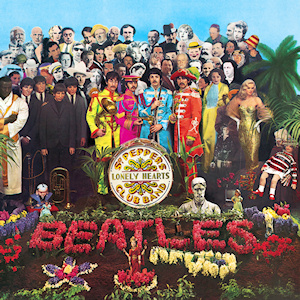
5. Sgt. Pepper’s Lonely Hearts Club Band (1967) – I already have an entire article on this album elsewhere on this blog, so I’m going to keep it short. Often considered one of the greatest albums of all time, I personally feel that Sgt. Pepper’s is just a tad overrated, if only for the quality of work that the band put out elsewhere. That said, it’s a fantastic album, a perfect union between artistic ambition, creativity, and song-to-song consistency. The cover is iconic, the sounds are revolutionary – all that. I could (and have) written in depth about each song. But I’m just going to say this: “Within You Without You” is a major statement from George in regards to the ongoing development of his eastern spirituality and sitar playing, and “A Day In the Life” is #2 on my list of all-time greatest album closers (and many people’s pick for best Beatles song). Is it the go-to record to introduce people to the band? No, as it’s reputation is impossible to overcome, and is best appreciated after one has acquired a taste for the band elsewhere.

4. Help! (1965) – THIS is actually the Beatles’ Great Leap Forward, coming half a year before Rubber Soul. It was on Help! that the band significantly stepped up their songwriting. The first side belongs to John. The opening title track is a blast of tortured neurosis. “You’ve Got to Hide Your Love Away” is a beautiful and lyrically complex acoustic number that is clearly influenced by Bob Dylan and apparently directed sympathetically at their gay manager Brian Epstien. There’s also room for George to use effects pedals to create a cool atmosphere for “I Need You,” and the side ends with “Ticket to Ride,” one of their very best. Side B opens with Ringo’s smiling run through “Act Naturally,” yet leans much more heavily toward Paul. The Cute One turns in the eternal “Yesterday” and the undeniably happy “I’ve Just Seen a Face.” The only dud on the record is the closing “Dizzy Miss Lizzy,” which fits their habit of closing with a cover. The habit was abandoned after this one, as they had clearly grown beyond it. Help! straddles the border between classic old-school Beatles and older, more experimental Beatles, and is their most underrated record.
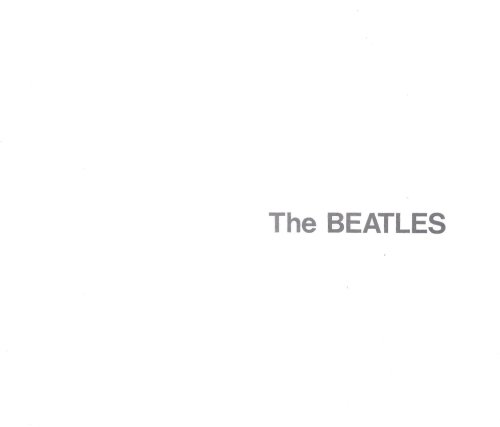
3. The Beatles (White Album) (1968) – The Year of Our Lord 1968 was a strange time for The Beatles. They had been the biggest stars on Earth for half a decade. Everything should have been good, but it wasn’t. Their longtime manager and friend Brian Epstein died unexpectedly the previous year, so they were now self-managing on top of dealing with that grief. As part of that, they decided to leave Parlophone/Capitol and start their own record label, Apple Corps. But, none of them were businessmen. In short, they were stressed. So in the spring they took a hiatus and, along with folk singer Donovan, actor siblings Jane and Peter Fonda, a couple Beach Boys, and everyone’s respective significant others, travelled to India to study Transcendental Meditation. They ended up staying for two months. Being away from the drugs, groupies, and paparazzi proved to be a godsend. More so than any spiritual enlightenment (besides maybe for George), they were able to relax and get back to what they did best: write songs. They came back with literally dozens of songs, and rather than cede any run time to any other member, the four of them decided to just record and release them all. And that’s how we got the double White Album. The album contains multitudes. It has their most experimental work and their most classicist, their hardest and their most gentle. There’s silly songs and serious songs, country songs and folk songs, blues songs and ska songs. I can’t bore you with dissections of everything, so I’m going to simply posit the best song from each member: “Dear Prudence” for John, “Blackbird” for Paul, “Don’t Pass Me By” for Ringo, and “While My Guitar Gently Weeps,” which is a monster of a song and probably George’s best ever, period. Even the slightest songs add texture and layers to the album. It’s a treasure trove to dig through and for my money is the best double album ever. I’ve seen it said that the white cover is like light before it is refracted into its different component colors, just like the Beatles are greater than the sum of their parts. I can’t say it any better than that.
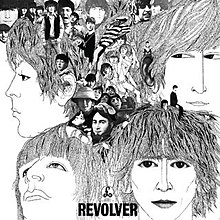
2. Revolver (1966) – Truthfully it’s a toss up between the #1 and #2 slots for this list, but I had to make a call. At the end of the day, this is a strong contender for most influential album of all time, or at least of the 1960s. If I had to choose one single album to define The Beatles, it would be Revolver. That’s because it has literally everything that the band did over the decade of their career, crystallized and preserved as a manifesto. At the time of its release, Revolver must have seemed like an explosion. It is such a step forward from Rubber Soul; it bursts at the seams with the thrill of discovery. It can almost be said that everything else The Beatles did over the remainder of their career was a variation of territory already staked out on this album. Despite the range of sounds and styles, it holds together as a singular piece of work due to their vision and distinct collective personality. The release is also the best way to determine the personalities of the four mates. Ringo sings the goofy “Yellow Submarine.” George bitches about British tax code on “Taxman” whilst laying down a killer Indian-inspired solo (and gets to open the album – what group synergy!). Elsewhere the Quiet One works out his sitar playing on “Love You To,” and the film director in me would love to see “I Want to Tell You” played over a civil rights or Vietnam era protest. Paul reveals himself to be the formalist of the group with “Here, There, and Everywhere,” “Good Day Sunshine,” and “For No One.” His “Eleanor Rigby” is a classic for a reason. It’s a haunting examination of loneliness and the faceless people who fill the world. Finally, he delivers one of his strongest vocal performances in “Got to Get You Into My Life,” as good a penultimate track as one can get. John is the rocker: “She Said She Said,” “And Your Bird Can Sing,” and “Doctor Robert” all sneer with overdriven guitar. He goes full beatnik on “I’m Only Sleeping” with its backwards guitar. And finally, we have “Tomorrow Never Knows.” This single song may be the most revolutionary released by the Beatles. If it was put out this week by, say, The Chemical Brothers or The Flaming Lips, or even Tame Impala, it would be hailed as a masterpiece. But it was recorded FIFTY-FOUR years ago. Over a booming hypnotic drum beat, John sings lyrics inspired by the Tibetan Book of the Dead. The rest of the tune is filled out by shifting lines of tape loops, backwards guitar, and snaking bass. I can’t imagine hearing it in 1966 with no precedent. What a trip. To this day, even with all the technology we have, it’s still the most psychedelic song ever recorded. It’s such a powerful end to the record. Even touching on every song, it’s hard to encapsulate what makes Revolver so good. It’s the moment when The Beatles went from a successful rock group to the greatest rock group ever.
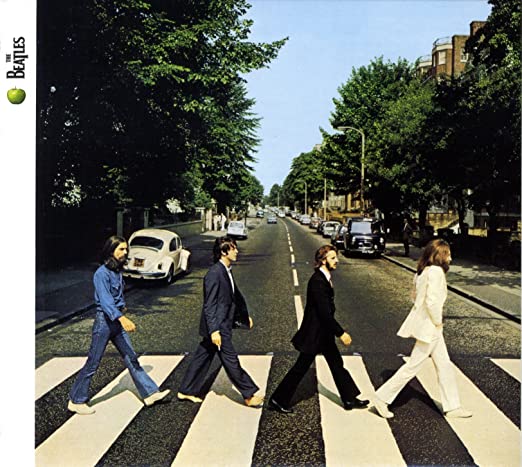
- Abbey Road (1969) –
It took me a while to figure out what to say about Abbey Road. From it’s iconic cover to the kaleidoscope of music within, it’s hard to say something new that will do the record justice. So I’ll start with my own first exposure to it. I was in middle school on a long car ride between states (I don’t remember where, exactly). I had my CD player and over-ear headphones, and a smattering of random CDs from my small adolescent collection augmented by a few of my parents’. I put in Abbey Road, as I liked The Beatles and wanted to hear more. For the next 45 minutes I was utterly captivated, transported to a world of light and music and adventure. It still feels that way when I put it on today.
Abbey Road was the last album recorded by The Beatles, although it was put out before the long-delayed Let It Be. After the troubling Let It Be sessions, the Fab Four mutually decided that they needed a hiatus. Before going on this indefinite break, they agreed to put aside their differences, convene in the studio, and put out one more collaborative effort. It is a self-conscious swan song, and the remarkable thing about Abbey Road is that it succeeds not only in reminding us of all the reasons we love the Beatles, but actually doing it all better than they had done before. If Revolver laid out the Beatles blueprint, Abbey Road is the full culmination of their sound, perfection crystallized for the ages.
It opens with “Come Together,” one of the most instantly recognizable of their career. It’s a thumping groover, with some great Lennon lines and some hard-edged playing throughout. Next comes “Something,” one of Geoge’s greatest love songs with a beautiful solo. “Maxwell’s Silver Hammer” is silly but undeniably catchy; the same goes for Ringo’s “Octupus’s Garden,” which also rocks despite its goofiness. “Oh! Darling” is an emotional standout, with Paul’s powerful belt over a tense retro-rock sway. The first side ends with “I Want You (She’s So Heavy)” which practically perfects the relentless plod of heavy metal at a time when Zeppelin and Sabbath were just starting out.
The second side is known to fans simply as “the medley.” Every song flows perfectly into the next for 22 minutes of uninterrupted bliss. The Beatles weren’t the first or last to do such a thing, but of course they are among the best. The proceedings start off with “Here Comes the Sun,” a perfect rejoinder to “I Want You”’s relentless dirge. “Here Comes the Sun” is one of those universal “forever songs,” a perfect statement of joy and hope. The fact that George wrote it after tense legal proceedings over Apple’s future says all we need to know about the lads’ excitement about putting the whole Beatles phenomenon behind them.
Next is “Because,” a sort of coda to “Here Comes the Sun.” John, Paul, and George sing in haunting three-part harmony, and it fades right into “You Never Give Me Your Money.” From there things take off, and the band leads us through upbeat rock, sunset Latin grooves, proto-punk bangers, and jaunty British pub rock. The lyricism paints colorful pictures to complement the vibrant music, and on all accounts it can only be said that the band is at the top of their game.
The medley ends with the mini-suite of “Golden Slumbers,” “Carry That Weight,” and “The End.” These 3 songs are, to my mind, the single greatest achievement of the entire 1960 musical revolution. It goes from a heartfelt piano and string ballad, builds to a thumping orchestral regal round, then crashes into a full on rager. Ringo pounds out his only recorded drum solo before giving way to an insane guitar solo in which the guitarists trade off in a musical conversation that mirrors their career. It’s so easy to determine each player’s style (John is rough and raw, George is technical and lyrical) but it goes together perfectly. It pretty much sets the benchmark for all guitar hero posing to come in the ‘70s and beyond. Everything comes together for the concluding pronouncement, “In the end, the love you take is equal to the love you make.” It’s a perfectly Beatlesque way to sum up the Golden Rule and cap off their career.
…Of course, there’s the secret track, “Her Majesty,” a great little ditty about getting wine drunk with the queen. It’s the same glibness and wit that made the lads stars in the first place, and is actually a better end to their career than even “The End.”
As we know, The Beatles never regrouped. As they spent time apart they each got invested in their own solo careers and decided to officially disband the next year. It’s sad to think about what could have been if they had continued to collaborate. Yet at the same time we already have a decade of music that stands up to this day – what more could we hope for? Over the ensuing decades we would come to know John, Paul, George, and Ringo even more through their individual work, but there is some sort of sui generis magic in their material recorded together. Abbey Road is the pinnacle of that. Not only does it still stand as the purest example of rock “sounds like” (it’s perennially the highest-selling vinyl record, still), but it does so much more than that. It bears out the magic of music to bring people together in celebration and love – over distance, through time, there’s that music in all of us.
 Then Play On
One thought on “The Act You’ve Known For All These Years: Ranking The Beatles’ Albums”