

“I am here today to talk about the Uplift Mofo Party Plan. A plan based on a band, a band based on a plan.There shall be no slaves in the land of lands, it’s a Hollywood jam.”
Over the past 35 years a little band out of California has raised hell and spread good vibes around the world: the Red Hot Chili Peppers. Formed by high school friends and nurtured in the fertile alternative music underground of Eighties Los Angeles, the Chili Peppers have gone on to become one of the most prominent rock bands of the modern era. Unlike other bands that blew up in the Nineties, they aren’t associated with grunge, but combined punk, funk, and psychedelia to create a distinctive brew of sound that earned them a spot in the mainstream while still rewarding deeper listening. More personally, they are one of my favorite bands ever; they happened to release the music video for “Dani California” right when I was 15 years old and just starting to get into music. It hooked me and I’ve been a big fan ever since.
My fandom, however, isn’t a given, as it seems that just as there are millions of fans around the world, there are also plenty of detractors. It’s very, very common, especially in hip music circles, to bash on the Chili Peppers. It seems like self-serious hipsters just can’t let themselves enjoy something that is supposed to be unabashedly fun. At some point, the Chili Peppers (along with Rage Against the Machine) got blamed for the rise of the often maligned “rap-rock” and nu-metal of the late Nineties, but are musically much more supple than their angsty imitators. They’re also associated in the public’s mind with the bro reggae of Sublime and 311 types. While RHCP do propagate some form of West Coast sunshine chill that is very stoner friendly, frankly they’ve always been way more than just surfer-bro fare. The best of their music is pure emotional expression; whether that emotion be celebration, melancholy, or lust, it comes across with an appealingly good-natured sincerity. Plus they do all this with an instrumental acumen that is far above many dreadlocked peers.
In fact, bassist/trumpeter/sometimes-vocalist/heart-of-the-band Flea is inarguably one of the best bass players ever, who combines energetic slap technique with deeper melodic grooves to create a supple foundation for everything they do. Vocalist Anthony Keidis originally drew from hip-hop as one of the first vocalists to consistently introduce rapping into a rock context, yet over time he’s become more comfortable with melody. Keidis is another major point of criticism for the band to many people. True, he isn’t a traditionally strong singer, but he is certainly distinct and a great performer. His lyrics often seem unclear or juvenile, but at the same time his abstract associations build upon themselves to conjure unique images that strike to the heart of an emotion. While I agree that Keidis is the weak link of the group, they certainly wouldn’t be the same band without him. I think most fans acknowledge this, and take it with knowingly good humor. The Peps have boasted several guitarists and drummers over the years who have each added their own spice to the proceedings; Chad Smith has been a reliable beatmaster since 1989, while their most frequent and successful six-string man John Frusciante has come to be acknowledged as one of the most brilliant guitarists of his generation.
At the end of the day, a little band that started as a side project between friends has built up into an alt-rock institution. The musical chemistry and genuine personal love between the Red Hot Chili Peppers, forged through both immense success and unfathomable tragedy, has spawned great, versatile music over the course of their career. We’re due for another release to come out on April 1st called Unlimited Love. With Frusciante back in the fold for the first time in a decade, expectations are high. No matter what we get, I’m confident that it will enhance the ongoing saga of one of the best bands of our time.
In honor of the new album, and as a way to push back against the haters, let’s take a look back at their prior discography. That’s right: it’s time for an ALBUM RANKING!! As always, no EPs, remixes, B-side compilations, or live albums (though it must be said that they are fantastic live). The members of the band seem to be very sincere guys who believe in expressing the ineffable through their art. As such, an understanding of their personal situation during each phase is important to fully appreciate the music, and I’ll go into a bit of history behind each entry. So, without further ado:
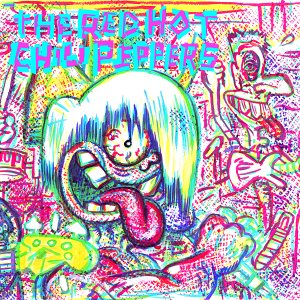
11. Red Hot Chili Peppers (1984)
How California?: Opening act for a dingy downtown punk show
The band’s first release is undoubtedly their worst, but that’s due more to their inexperience and circumstances beyond their control than outright suckage. I mentioned earlier that the band was formed by 4 high school friends: Flea, Anthony Keidis, guitarist Hillel Slovak, and drummer Jack Irons. However, Slovak and Irons also played in another band called What Is This?. What Is This? got signed while RHCP was still passing around their demo, so the two instrumentalists made the decision to quit and go with What Is This? full time. So, Flea and Anthony recruited guitarist Jack Sherman and drummer Cliff Martinez to fill in for their departed friends; it was this lineup that was signed and recorded the first album. Gang of Four guitarist Andy Gill was tapped to produce, and he gave the record a tinny, thin sound that did the songs no justice. They re-record 4 songs from the demo filled out with 6 new numbers and a Hank Williams (!??) cover. “True Men Don’t Kill Coyotes” is a great opener and introduction to the band, with Keidis delivering a fun and surprisingly restrained vocal. “Get Up and Jump,” and “Out In L.A.” are the two best songs here, and it’s a shame we don’t have better recordings of them. Beyond that, “Green Heaven” has an environmental message, “Mommy Where’s Daddy?” is funky yet kind of creepy, and “Baby Appeal” has one of my favorite good-natured boasts: “The Red Hots have baby appeal!” Jack Sherman reportedly didn’t fit in with the rest of the band personality wise, and his playing does sound stiff throughout. Yet he also reportedly supplied a good bit of technical and compositional know-how that they needed to get the record off the ground. When, after one album, What Is This? fell apart, the Peppers booted Sherman and asked Slovak to come back to the fold, paving the way for the rest of their career. As it is, this self-titled debut is now mostly a historic artifact.
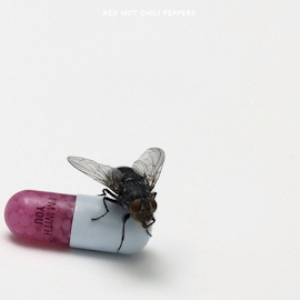
10. I’m With You (2011)
How California?: Suits in top office suite demanding another record
I’m With You came at an uncertain time in the Chili Peppers’ career. They were undoubtedly one of the biggest bands in the world, and had just won a Grammy for their prior release. However, their ace-in-the-hole guitarist John Frusciante quit to focus on his solo work; reportedly he just didn’t feel connected to the band’s music any more. Yet he had an heir apparent: longtime friend, protege, and collaborator Josh Klinghoffer. Klinghoffer stepped up and joined the band despite being almost two decades younger than the others. I’m With You is the first album with him in tow. On the surface, it sounds pretty much like what you’d expect from a latter-day Chili Peppers release, with well constructed songs, groovy riffs, and strong backbeats. However Klinghoffer is a more textured, effects driven player than Frusciante, and he brings a more atmospheric sound to most of the record. Beyond that, the band sounds like they are treading water, most likely working in Josh and figuring out where to go next. The band is good enough that it’s always a pleasure to hear them play, and there are a handful of good songs to be found throughout the disc. “Brendan’s Death Song,” especially, was written in honor of a deceased friend and is an epic standout. While fans of the band will find enough to like, the workmanlike nature of I’m With You makes it one of their least essential. (Also, 2011 marked the introduction of Anthony’s mustache, which is extremely ill-advised and really has to go.)
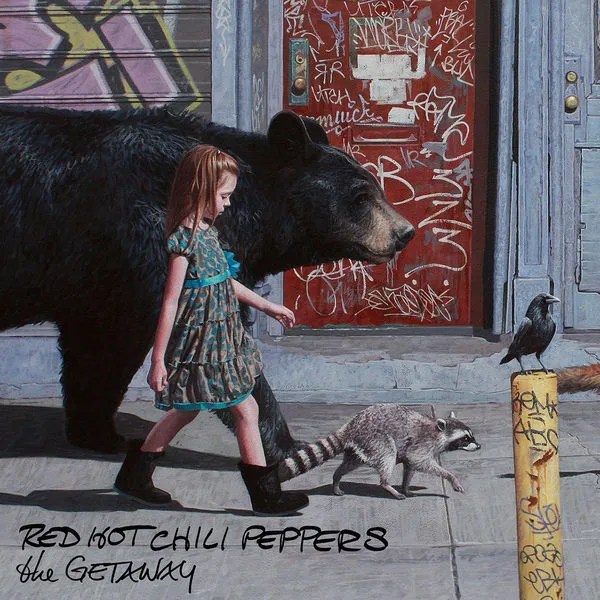
9. The Getaway (2016)
How California?: Weekend meditation retreat
The follow-up to I’m With You is more complex and nuanced, and really is one of the most unique albums in Red Hot Chili Peppers’ discography. It was produced with hip-hop artist Danger Mouse. I like Danger Mouse’s production, but oftentimes when he works with rock artists, such as The Black Keys, his over-production ends up washing out the grit that gives music its purchase. The Getaway is one of his most successful forays into rock, and I think a large part of the success comes from having a sympathetic collaborator in Josh Klinghoffer. Like I said before, Klinghoffer is interested in electronic production and textured sound, so the two were able to work together to make a more “modern” sound that’s still simpatico with the Chili Peppers’ M.O. This is their ultimate grower album – it took a few spins for me to really parse it out and appreciate it, but now I dig it a good bit. It’s certainly different from everything else they’ve done, and for better or worse I appreciate that much more than the same-old-same-old I’m With You. Clear standout is lead single “Dark Necessities,” a multi-sectioned nighttime song that’s an obvious late career greatest hit. Beyond that, The Getaway sees the band returning to their earlier overtly funk influenced (dare I say dancy?) sound. The only misfire is closing number “Death of a Samurai,” which is designed to be an epic but provides no purchase for the listener. In 2019 it was announced that Frusciante is coming back into the fold after his decade in the wilderness, so Klinghoffer is out. Poor kid. That said, The Getaway is probably the extent to which he would positively influence their sound. So the verdict: unique, satisfying, but not as good as their reputation making material.
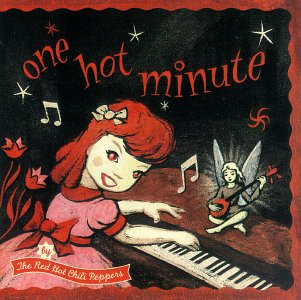
8. One Hot Minute (1995)
How California?: That part of the night where the nightclub goes from exciting to scarily disorienting
Even though I place One Hot Minute at #8, do not be fooled. It’s a very solid album that that just shows off a different side of the band. One Hot Minute is by far the dark horse of their catalog, with fans split pretty evenly on its worth. As always, personal issues contributed to the strange singularity of the record. After the massive success of Blood Sugar Sex Magik and its ensuing world tour, John Frusciante quit the band (for the first time) due to his inability to adjust to fame. The rest of the band hooked up with former (and now current again) Jane’s Addiction guitarist Dave Navarro. Jane’s and the Chili Peppers came up together in the same L.A. scene and were friends, so at first the replacement made sense. Navarro brought a much heavier style to their music. On top of that, the absence of John’s clean backup vocals forced Flea to sing more; while he’s a great musician, he is not a great singer, and his reedy voice brings a cracked feeling to much of the proceedings. Worst of all, Navarro’s hard partying lifestyle was a bad influence on Anthony, who had been clean since the late ‘80s. The singer soon relapsed, and that bled over into his performance. All of these factors combined to make the darkest music of the Chili Peppers’ career. The whole album feels off-kilter, with dense guitar, complex drumming, and tortured lyrics. Opener “Warped” sets the tone with a trippy fade-in and uh…warped Keidis vocals. From there we shift from one riff to the other. Stand out tracks are the nostalgic “Deep Kick,” about looking at their wild childhood and tracing the trajectory to the present, the mostly acoustic “My Friends,” and “Tearjerker,” which is an homage to the departed Kurt Cobain (whom the band knew through their mutual rise to fame). Funk is still present, especially in “Walkabout” and “Aeroplane,” which is the only song here that’s still regularly performed by the band today. But funk is more shading to what’s really a straight-ahead hard rock album. So, again, One Hot Minute is atypical Peppers. But it’s not bad, and if anything the twisty song structures and turgid psychology provides a lot to dig on repeat listens. If you know RHCP exclusively for sun and fun, go here first for a taste of what more there is.
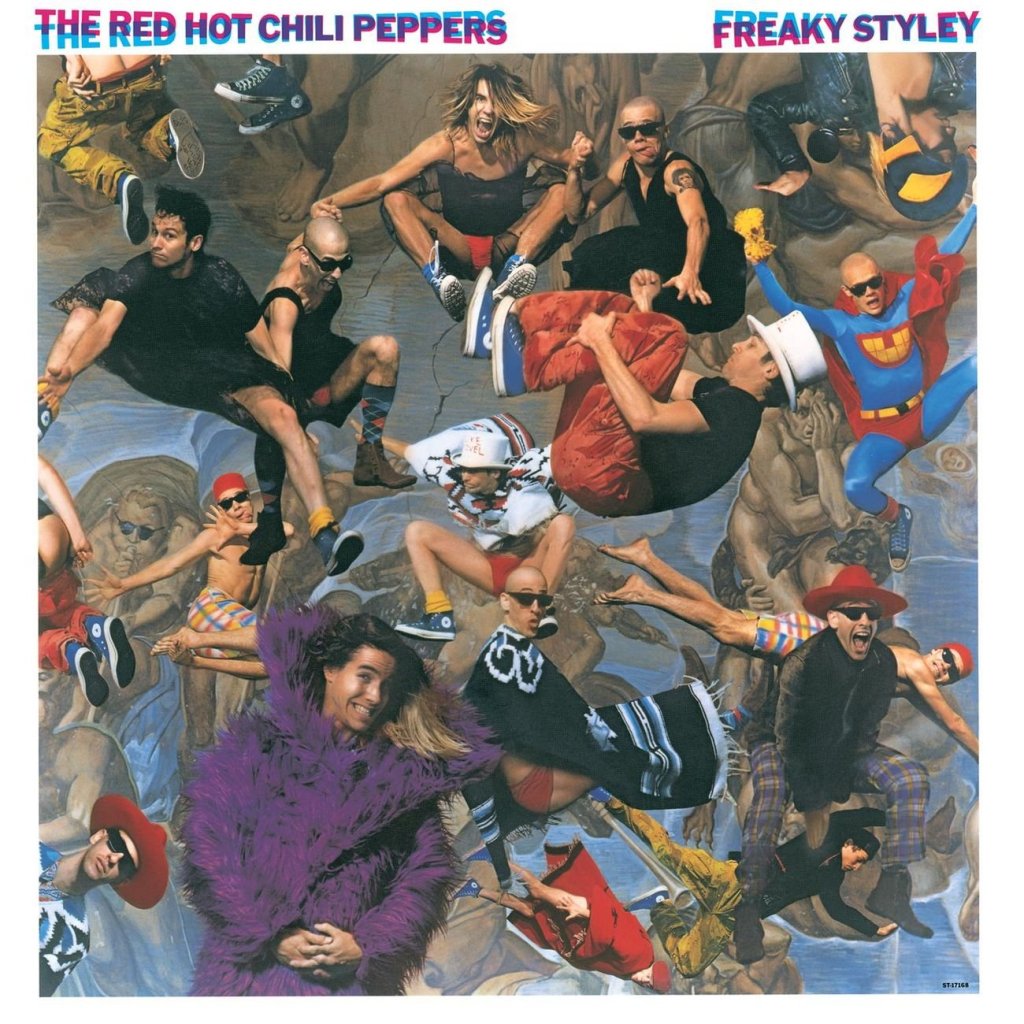
7. Freaky Styley (1985)
How California?: A big house party in the Hills with all your friends
What a change new (or old) blood can make. After the sacking of Jack Sherman, founding guitarist Hillel Slovak was back, and immediately supplied the pizzaz that their debut lacked. On top of his return, they somehow managed to pull in George Clinton to produce their sophomore release. Yes, the same George Clinton who masterminded Parliament-Funkadelic in the Seventies – Dr. Funkenstein himself. Needless to say, Freaky Styley is the funkiest album in their oeuvre, and it’s not even close. The grooves are so thick, the rhythms are complexly syncopated yet breath with space, and the guitar sounds great. Kudos to Cliff Martinez for laying down very underrated drumming on this one. To complement the tunes, Flea also overdubbed loads of horns on almost every track, and it all fits together very, very, well. They even find room for two covers, one from The Meters and another from Sly & The Family Stone. The Sly Stone number, “If You Want Me To Stay,” is at least just as good as the original, if not better (even though I know that may be a sin to say). Since it’s so old, Freaky Styley often gets overlooked, although it’s certainly their album most deserving of more love. It’s unabashedly fun – they even adapt a Dr. Suess poem! – and the fact that they never worked with Clinton again means that we’ll never see them indulge this much in their funk interest. Highly recommended.
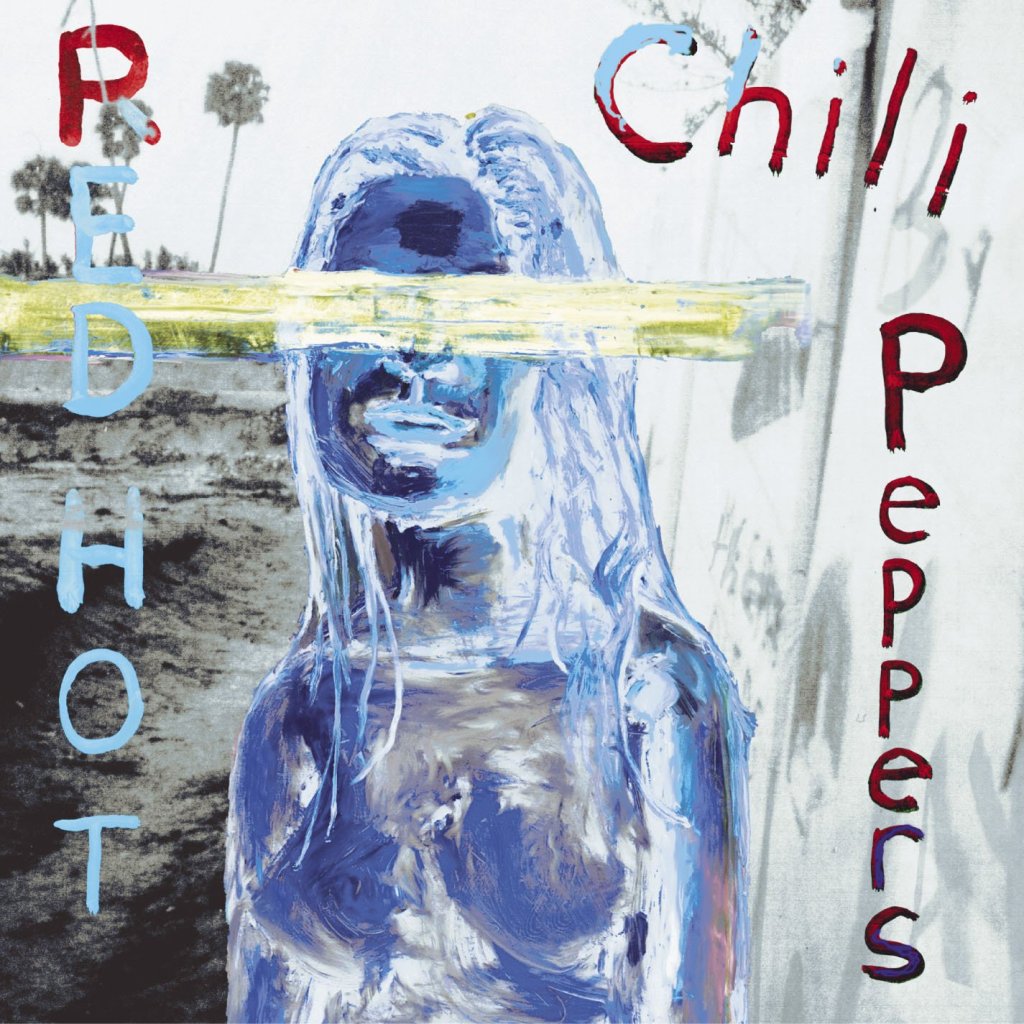
6. By the Way (2002)
How California?: Driving on Big Sur Coast Highway at night
Woah! That By the Way sits in the middle of the list may come as a surprise to fans, as By the Way is by far one of the Chili Peppers’ most successful and well-loved albums. Here’s the thing: of all their stuff, it has the starkest difference between good and bad material. Ironically, the three most famous songs off the album, “Can’t Stop,” “Universally Speaking,” and the title track, are probably my three least favorite RHCP songs. I’m not sure why. They feel repetitive and lack the dynamics of their best stuff, and it doesn’t help that I feel that they are way overplayed everywhere. So any charms that they originally held for me have been worn down. The record is also very long, and a few tracks (“Tear,” “Cabron,” the aptly titled “Minor Thing”) could probably have been saved for B-Sides. That said, other deep cuts on here are fantastic. Apparently Flea was contemplating quitting the band to teach music full time, so pulled back during writing and recording sessions. Fortunately he stuck it out, but his temporary malaise left room for John Frusciante to step up. Together, John and newly sober Anthony turned in a tracklist of mostly mid-tempo ballads. Many of the songs are quite emotional and deal with dark subject matter, yet are buoyed by gorgeously lush production. Frusciante sings all over By the Way; while he always provided prominent backup vocals, on this one he almost comes across as a second lead singer. His soaring voice harmonizes very well with Anthony’s and instills a beautiful pathos to most of the lyrics. Amidst the turgid emotionalism, a few spots of sunshine poke through, most notably the sublime “Zephyr Song.” Don’t get me wrong – By the Way is a decent album that holds some true gems, but it’s one that I have to be in a specific mood for and is just a touch overrated on the whole.
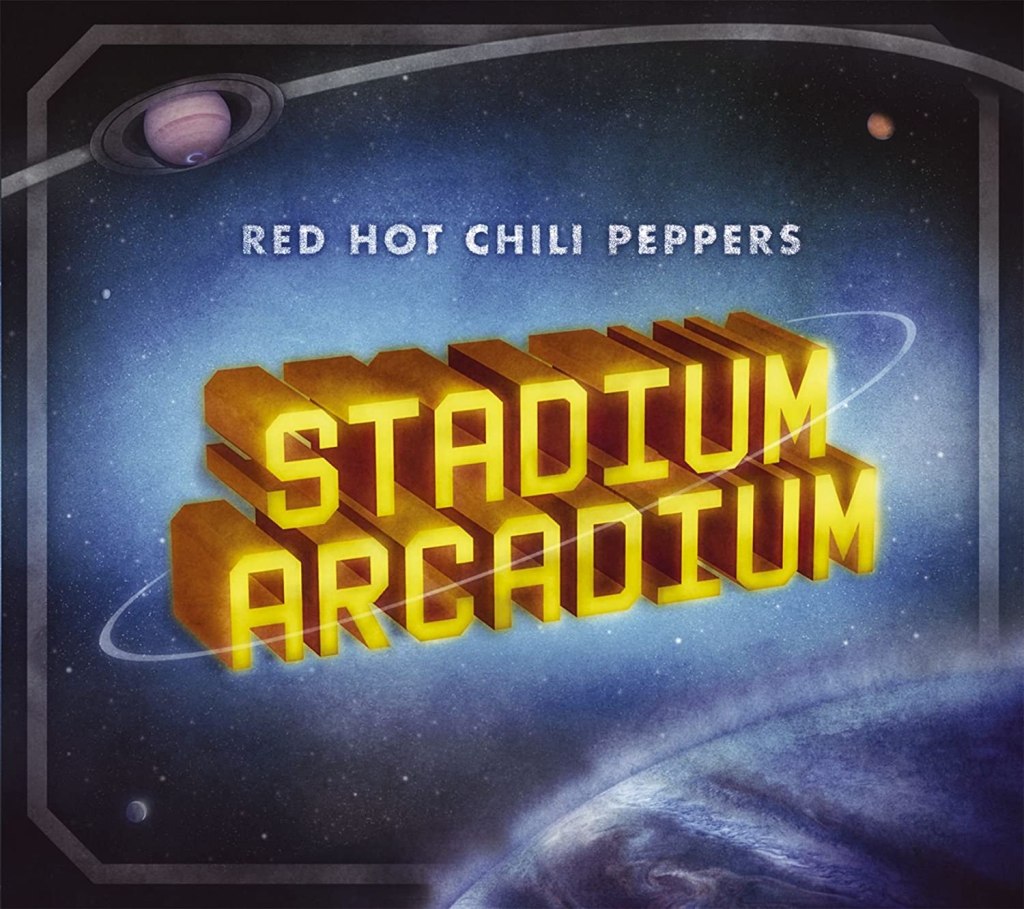
5. Stadium Arcadium (2006)
How California?: Lazer light show at the planetarium
At some point in almost every successful band’s career, they try their hand at an ambitious double album. For the Chili Peppers, 2006 was the best time to indulge, as they were riding high after two massively successful album/tour cycles and really had nothing to lose. Some say that the 28 song Stadium Arcadium, divided into two equal discs called Jupiter and Mars, is too unfocused and full of one-off songs that don’t congeal into a unified whole. But, isn’t that the point of double albums? All the greats, from The White Album to Physical Graffiti or Exile On Main St., are about sprawl. They are a scrapbook of ideas that is a treasure trove for fans to dig through and appreciate. By the third decade of their career, the Peppers knows how to write and record songs, and every entry on the tracklist is a strong, perfectly arranged composition. My only criticism is that too many of the songs lack a definitive ending, and more often than not conclude by sliding into feedback. Yet more than any other element, what makes Stadium Arcadium tick is the guitar wizardry of John Frusciante. He absolutely slays on this album, running wild across every style they attempt. Out of the plethora of good songs, it’s easy to pick the highlights based on his performances alone. Opener “Dani California” is iconic for a reason. “Slow Cheetah” is a cool spacey acoustic number, and “Torture Me” is an amazing full-speed-ahead rocker. “Readymade” has some twisty time signatures in it, and I can tell you from personal experience that it’s very fun to play on drums. [Allow me to take a minute here to shout out Chad Smith. While I haven’t mentioned him much, he’s a powerful, super reliable in-the-pocket drummer who perfectly compliments everything the rest of the band wants to do.] Finally, the two concluding songs are a one-two-punch. “Turn It Again” is a longer song that builds to a S H R E D D I N G outro solo. “Death of a Martian” is written as a eulogy for Flea’s dog Martian who died during the sessions. It contains one of Anthony’s best raps ever, a full hearted send off that’s a better closer than any other song on the double disc could be. I admit that personal bias may rank Stadium Arcadium higher than others may place it, but it’s the first Chili Peppers album I heard and has provided me with countless hours of listening. Of course, it’s also the most recent release with Frusciante, which speaks to the hype surrounding his return on the upcoming Unlimited Love.
4. The Uplift Mofo Party Plan (1987)
How California?: Aimlessly cruising in hot rod down palm tree-lined streets, windows down blasting music
It wasn’t until a few years after releasing their debut that the Red Hot Chili Peppers came into their own. After Freaky Styley, drummer Cliff Martinez amicably left because of his desire to play “more experimental” music. Surprisingly, founding skinman Jack Irons expressed interest in returning, and the band’s original lineup was finally ready to record together for the first time – on their third album. The chemistry between the four is felt right out of the gate with “Fight Like a Brave” (quoted at the top of this article), the best single they’d put out yet. Truly, The Uplift Mofo Party Plan is a mission statement: every song is a testament to their fun loving, libidinous ways. There’s an energy that can only come from four old friends doing what they love together, when they were still young enough to feel fresh and the initial wave of success hadn’t yet broken. Indeed, Hillel Slovak is the star of the show. His riffs are more prominent due to the lack of horns, and he pops off inventive solos that show how much he really was the architect of the original Chili Peppers sound. Individual standouts are the undeniably open-hearted “Me and My Friends,” the aggressive “Love Trilogy,” and their quirky cover of Bob Dylan’s “Subterranean Homesick Blues.” There’s also “Behind the Sun,” one of the greatest beach-day songs of all time. Tragically, Uplift Mofo sees the Peppers’ star burn too bright too fast: shortly after the supporting tour (their most successful thus far) Hillel overdosed on heroin. In grief, Irons quit the band, leaving Flea and Keidis once again on their own. For their part, both got clean and swore off hard drugs. Flea was successful, but Anthony would struggle with addiction for the next 15 years. It’s tempting in retrospect to see this album existing under a shadow, but it’s so good that you can’t help but party along with it. The Uplift Mofo Party Plan is the best encapsulation of the first part of their career, and still holds up as one of their best efforts.
3. Mother’s Milk (1989)
How California?: Shredding at the Venice Beach skatepark
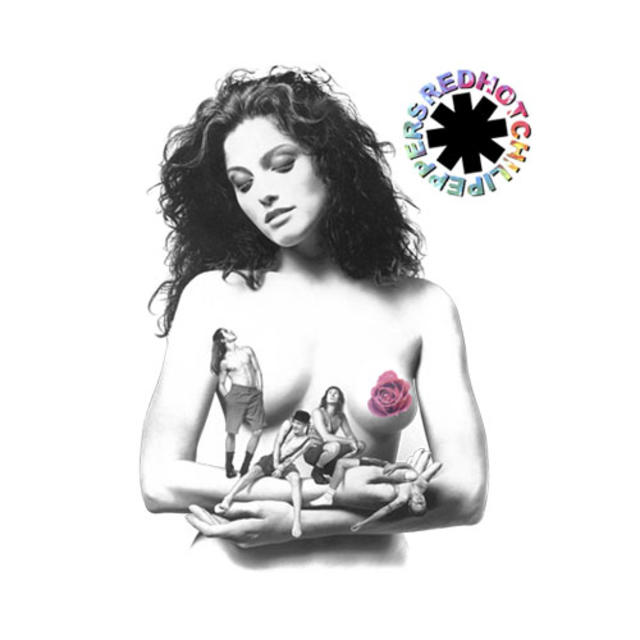
In most band’s stories, the death of a visionary founding guitarist and resignation of their drummer would spell doom. In a twist of fate, the unfortunate death of Hillel Slovak ended up being a boon for the Red Hot Chili Peppers. Not that Slovak’s death is a good thing – who knows what he could have accomplished with them in the years hence. However, the vacancy allowed them to hook up with two players who would take their band to the next level. First was Chad Smith, who took Jack Irons’ place on the drum riser and still holds it down today. Next was wunderkid John Frusciante, who is ten years younger than his bandmates and actually started as a Chili Peppers fan. He met them at shows during the Hillel years and soon became friendly with them. When he auditioned, he reportedly already knew their entire songbook by heart. Hillel’s funk-punk was a major influence on Frusciante’s playing moving forward, but he also added in a healthy dose of Hendrixian flash and a personal creative expression that meshed perfectly with what Flea brought to the table. The band reemerged with their new lineup on Mother’s Milk. Beyond the new blood, the fact that Anthony and Flea were off of drugs for the first time in their recording career certainly helped the songwriting process. In fact, one big hit off of Mother’s Milk, “Knock Me Down,” is very explicitly about not getting high. (Get it?) The other, bigger hit, their strong Stevie Wonder cover “Higher Ground,” broke into the mainstream. Overall, this album is the sound of the soon-to-be iconic lineup gelling and figuring out how to play together, and as such it’s the first album to really sound like what we’ve come to expect from classic Red Hot Chili Peppers. You can feel the thrill of discovery in the interplay between the musicians. “Nobody Weird Like Me” and “Pretty Little Ditty” especially are revelations in regards to what the band is capable of. “Punk Rock Classic” lives up to its name, with some fiery fretboard work from John, and they keep their one or two covers per album going with a run through Jimi Hendrix’s “Fire.” My only complaint is that the production is a little too hollow for me. It fits for the era it came from but you know that it would sound fuller if made just a few years later. It’s a minor quibble about what is a great collection of tunes, easily their best of the Eighties, and the start of the second phase of their career.
2. Californication (1999)
How California?: Surfing off of Santa Monica
I mean, come on. It’s Californication. If there’s one Red Hot Chili Peppers album that EVERYONE knows, it’s this one. Released in 1999, the Rick Rubin produced record broke the world. It contained massive singles and ultimately ensured that the band would be a major player for the rest of their career. Interestingly enough, such success was not a sure-fire thing. The group’s previous offering One Hot Minute was a qualified failure, and while they remained a popular live attraction there was no expectation for them to continue to burn up the charts. In the four year gap between albums, however, the band once again engaged in a little line-up change. Guitarist Dave Navarro was kicked out, reportedly due to his inability to effectively jam as well as his personal issues that interfered with the band’s productivity. In his place, the Peppers turned to his predecessor John Frusciante, who had quit years earlier over what was essentially an extreme case of stage fright. In the interim, Frusciante developed a severe drug addiction; his trials during the mid-Nineties are worth their own chronicling. Suffice it to say, he was in a bad place and ended up in almost abject poverty. After accidently burning down his own house, the guitarist went to rehab and got clean, a condition which he has maintained to this day. Once the rest of the band heard of his rehab success, Flea visited him and, after a long conversation, asked him to return. He agreed.
It’s tempting to say that Californication is solely a triumphant return for Frusciante, but that would be undercutting the full achievement of the project. It’s really a full on comeback for the entire group that collectively sees them modernize their sound for the new millenium and set the standard by which they’d be judged for the rest of their careers. It’s almost as if, after a half-decade of stagnation and turmoil, being back together opened the creative floodgates. Song for song it may be the strongest tracklist they’ve ever produced. “Around the World” is a powerful opener, and an excellent example of how Frusciante does more with less notes. “Parallel Universe” showcases Flea going absolutely beast mode; my fingers hurt just from listening to his bass line. For a long time “Otherside” was my favorite RHCP song, and it still stands as a great number. “Californication” sees Kiedis actually engage in some prescient social commentary, and then “Scar Tissue” is one of their most popular songs. How do you talk about a tracklist that has ultimately come to define the sound of an entire state? When you talk about “California music,” you have The Beach Boys, and you have the Red Hot Chili Peppers. But specifically the Chili Peppers of Californication. It’s probably my most listened to of their records, just because, no matter the situation, it always goes down easy.
1. Blood Sugar Sex Magik (1991)
How California?: Stripping off your clothes in the middle of the desert and dancing until the sun gives way to the moon
At their core, the Red Hot Chili Peppers are not songwriters. They are actually more like a jam band, except a jam band that comes from the worlds of funk and punk instead of jazz and Americana. No other record exemplifies this more than Blood Sugar Sex Magik. It came along at just the right point in time to capture the zeitgeist of the burgeoning alternative culture. When I say “alternative,” I don’t mean as it’s thought of now – essentially anything with scuzzy guitars and an off-kilter singer. I mean true alternative – left of the dial, pushing the boundaries of what was acceptable in the mainstream rock world. The Chili Peppers were the party band for the West Coast bohemian artists, and Blood Sugar Sex Magik is their ultimate statement.
With Frusciante firmly entrenched in the band after the next level success of Mother’s Milk, the guys rented a Los Angeles mansion with producer Rick Rubin, where they lived together for a month. During this time they wrote, jammed, recorded, and hung out as any band of twentysomethings would. Even though I just said that the Peps are not primarily songwriters, they have had their flourishes throughout their career. By the Way is extremely song oriented, yet it’s also more laid back and ballad heavy than their best stuff. Californication has their most popular mainstream songs, but the production sands away some of the more interesting edges. BSSM is where all three elements – their musical energy, formal experimentation, and the best batch of songs written to that point – dovetail equally. The result is one of the Nineties’ most iconic albums.
It starts off with “The Power of Equality,” a song that I actually think is one of the weakest on the album, despite its positive message. From there, the band takes the listener on a journey: guitar shifts and percolates over flexible bass, which itself locks in with rock steady drumming to create a tapestry of multicolored music. “If You Have to Ask” and “Funky Monks” both invert their riffs before opening up to allow for a bit of groovy exploration. Single “Breaking the Girl” is unlike almost anything else in their discography, featuring as it does a rustic acoustic ramble that captures the wide open possibilities of infatuation. (It even includes a trash-can percussion interlude that actually fits!) “I Could Have Lied” is one of my favorite tracks on the album, a ruminative meditation that gets torn open with a heart-on-sleeve guitar solo. “Mellowship Slinky in B Major” flows right into “The Righteous & the Wicked” in one of the hardest rocking segments of the album. Then we get to “Give It Away,” a huge single and still one of their most well known songs. I honestly think I would enjoy it more if it wasn’t so overplayed, but it still has one of the best music videos of all time. After the murky title track we have “Under the Bridge.” About Anthony’s past drug addiction and love for the city that pulled him through, it is far and away their most famous song. Fifty years from now, if everything else the Red Hot Chili Peppers do is discarded and forgotten, this song would still stand as a totem of the era. While it too is a bit overplayed, that doesn’t matter as much because frankly it’s undeniable. I am so bummed that the one time I saw them live, they didn’t perform it! I just want to sing along arm in arm with the rest of the assembled mass of humanity! Oh well, I’m going to catch them this fall, so there’s still hope.
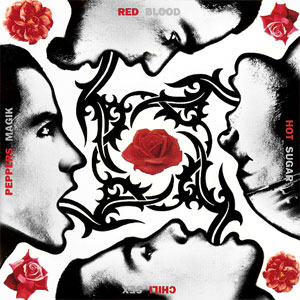
BSSM is a long album, but you really don’t mind because it all sounds good. The back half contains “Naked in the Rain,” which sports one of my favorite Chad Smith drum parts, and the cool Hillel Slovak tribute “My Lovely Man.” It all leads to “Sir Psycho Sexy.” This is the source of, and ultimate punchline to, every parody of Anthony Keidis. In a white boy flow he raps out verse after verse of ridiculous sexual scenarios. Full of just-barely double entendres, AK’s fantasies all depict him as an unstoppable lady killer. It’s easy to roll your eyes, but at the same time it’s clear enough that his tongue is at least a little in his cheek at all times, and besides that – the music is spectacular. It rides a grungy funk riff in the first half, then the long instrumental outro morphs into an exalted levitation that earns the roses on the front album cover. Tucked away at the end almost as an aside is a wacked out cover of Robert Johnson’s “They’re Red Hot,” a nod to the past while also pogoing right over it.
In the grand scheme of things, I acknowledge that many people consider the Chili Peppers to be a goofy band of average quality that has somehow clung onto success. And they may very well be an average band. But even averages have outliers, and Blood Sugar Sex Magik is the fulfillment of their promise, a kaleidascopic gumbo of everything that keeps fans coming over the years. Music taste is subjective, and I gave up caring if some cultural influencers think they are silly. There is room in music for both serious stuff with deep conceptual messages, and music made just for the thrill of it – for shedding the troubles in life to rock out with your sock out. That’s what the Red Hot Chili Peppers do so well, and that’s why they’ll always be one of my favorite bands.
 Then Play On