Category Archives: Discography

…But I Like It: Ranking The Rolling Stones’ Post-1967 Discography

“Oh but Rob,” you probably think. “You wrote so lucidly about The Rolling Stones’ first several albums, are you ever going to drop some insight on the rest of their career?” Don’t worry dear Reader – I’ve got you covered. Ohhh yes! Another Rolling Stones article! In honor of their newest record – the band’s 24th studio album – it only makes sense to look at their remaining studio output, and rank their albums from 1967 onward. That year marks the first time that they released an LP with the same unedited tracklist on both sides of the Atlantic, which makes it much easier to look at the album as a single body of work. 

The Rolling Stones have had a long and winding career, full of ups and downs in both personal life and public favor. The remarkable thing about the band is that no matter the time period, and no matter how they negotiate with contemporary trends in mainstream music, they always end up sounding like themselves, and always seem to have a broad appeal. Of course, over time they’ve put out a few duds, if just because of the law of averages. Even on their worst efforts, there are songs and grooves that add a welcome wrinkle to the broader picture. The Stones are a very tight and capable band, and when you dig into their back catalog it’s surprising to be reminded of how diverse and responsive their sound can be. Even the fact that they included a couple covers on every release is a benefit, not a weakness. They’re a band that spotlight their influences in a way that brings them to the attention of an otherwise ignorant audience. Some say the band was never the same after they expanded beyond the rough garage-blues of the Sixties, or after their fey psychedelic period, or after Brian Jones died. Yet there’s still a common thread that runs through the decades: at the end of the day, outside of influence and changing taste, the Stones remain a band that has a deep understanding and feel for the base foundations of rock, and always do it right. That’s why they remain popular – because if someone likes rock music, they probably like the Rolling Stones.

Continue reading …But I Like It: Ranking The Rolling Stones’ Post-1967 Discography

“The Sound Resounds:” Ranking Pink Floyd’s Studio Albums

AUTHOR’S NOTE and WARNING: This is an extremely long read. Really, I could have written an entire essay on each album (and in some cases did). But I wanted to give each piece its due and situate it properly into context. Not that I underestimate your commitment nor reading comprehension; of course I would love for you to read and enjoy it. However I personally feel that it grew past its original scope and owe it to you to let you know that this isn’t a quick toilet read (unless you really have to go). I wrote this over a period of some time, and several threads emerged that weave in and out of the whole: how Syd Barrett’s breakdown influenced everything about the band subsequently; how Pink Floyd’s music, lyrical themes, and imagery come together to make a whole greater than the sum of its parts; how The Dark Side of the Moon is the ultimate encapsulation of all of this. Shine On.

What is the sound of space? How do we aurally capture the vast star-speckled expanse of the void, the intractable unknown? Just as the universe holds near infinite possibilities, there are countless ways to signify the feel of outer space: clear, high guitar; textured, effect laden electronics; pulsing, spacey rhythms; a beating undercurrent of menace, yet at the same time a touch of austere beauty. Not coincidentally, these same sonic touchstones also describe the music of that singularly monolithic institution: Pink Floyd.

Continue reading “The Sound Resounds:” Ranking Pink Floyd’s Studio Albums

In Defense of the Red Hot Chili Peppers: A Ranking

I am here today to talk about the Uplift Mofo Party Plan. A plan based on a band, a band based on a plan.There shall be no slaves in the land of lands, it’s a Hollywood jam.

Over the past 35 years a little band out of California has raised hell and spread good vibes around the world: the Red Hot Chili Peppers. Formed by high school friends and nurtured in the fertile alternative music underground of Eighties Los Angeles, the Chili Peppers have gone on to become one of the most prominent rock bands of the modern era. Unlike other bands that blew up in the Nineties, they aren’t associated with grunge, but combined punk, funk, and psychedelia to create a distinctive brew of sound that earned them a spot in the mainstream while still rewarding deeper listening. More personally, they are one of my favorite bands ever; they happened to release the music video for “Dani California” right when I was 15 years old and just starting to get into music. It hooked me and I’ve been a big fan ever since. 

My fandom, however, isn’t a given, as it seems that just as there are millions of fans around the world, there are also plenty of detractors. It’s very, very common, especially in hip music circles, to bash on the Chili Peppers. It seems like self-serious hipsters just can’t let themselves enjoy something that is supposed to be unabashedly fun. At some point, the Chili Peppers (along with Rage Against the Machine) got blamed for the rise of the often maligned “rap-rock” and nu-metal of the late Nineties, but are musically much more supple than their angsty imitators. They’re also associated in the public’s mind with the bro reggae of Sublime and 311 types. While RHCP do propagate some form of West Coast sunshine chill that is very stoner friendly, frankly they’ve always been way more than just surfer-bro fare. The best of their music is pure emotional expression; whether that emotion be celebration, melancholy, or lust, it comes across with an appealingly good-natured sincerity. Plus they do all this with an instrumental acumen that is far above many dreadlocked peers.

In fact, bassist/trumpeter/sometimes-vocalist/heart-of-the-band Flea is inarguably one of the best bass players ever, who combines energetic slap technique with deeper melodic grooves to create a supple foundation for everything they do. Vocalist Anthony Keidis originally drew from hip-hop as one of the first vocalists to consistently introduce rapping into a rock context, yet over time he’s become more comfortable with melody. Keidis is another major point of criticism for the band to many people. True, he isn’t a traditionally strong singer, but he is certainly distinct and a great performer. His lyrics often seem unclear or juvenile, but at the same time his abstract associations build upon themselves to conjure unique images that strike to the heart of an emotion. While I agree that Keidis is the weak link of the group, they certainly wouldn’t be the same band without him. I think most fans acknowledge this, and take it with knowingly good humor. The Peps have boasted several guitarists and drummers over the years who have each added their own spice to the proceedings; Chad Smith has been a reliable beatmaster since 1989, while their most frequent and successful six-string man John Frusciante has come to be acknowledged as one of the most brilliant guitarists of his generation.

At the end of the day, a little band that started as a side project between friends has built up into an alt-rock institution. The musical chemistry and genuine personal love between the Red Hot Chili Peppers, forged through both immense success and unfathomable tragedy, has spawned great, versatile music over the course of their career. We’re due for another release to come out on April 1st called Unlimited Love. With Frusciante back in the fold for the first time in a decade, expectations are high. No matter what we get, I’m confident that it will enhance the ongoing saga of one of the best bands of our time.

Continue reading In Defense of the Red Hot Chili Peppers: A Ranking

No Stone Unturned: Excavating The Rolling Stones’ Early Catalogue

In my most recent prior post, in which I nebulously reflect on what it means to see The Rolling Stones in concert, I mention that their longevity as a functioning band has seemed to actually hurt their image in the eyes of young modern music fans. Since their sound and image has been so incorporated into the broader definition of rock, it’s difficult to appreciate their contributions without prior context. 

Continue reading No Stone Unturned: Excavating The Rolling Stones’ Early Catalogue

Wilco Will Love You, Baby: Ranking Their Discography

    Wilco’s November deluxe reissue of their seminal album Summerteeth was my favorite rerelease of 2020. Besides a remastered version of the actual album, it contained a disc of demos and alternate takes, and an entire live performance from 2000. Beyond being chock full with great music, the boxset reminded me of just how good Wilco is. It inspired me to take a deep dive through their discography.

Continue reading Wilco Will Love You, Baby: Ranking Their Discography

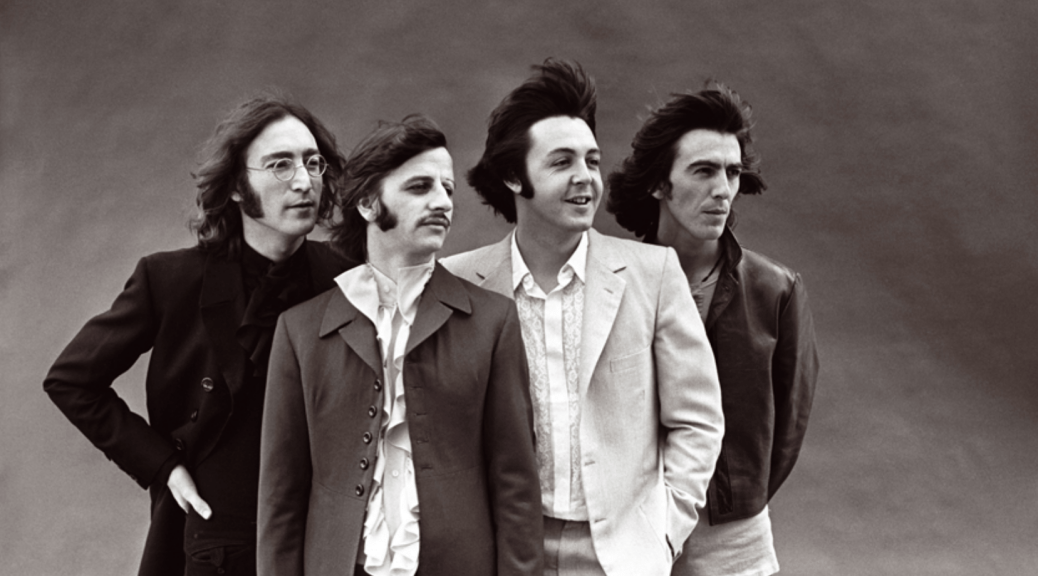
The Act You’ve Known For All These Years: Ranking The Beatles’ Albums

This weekend was my thirtieth birthday. Before looking forward at what is to come, I took a moment to look back at what has come before. It’s fitting that I return to that which got me started. The Beatles and Beethoven were the bedrock of my exposure to music, so it’s fitting that I go back to them and get into doing what I’ve most enjoyed about this blog: making lists. Here’s my ranking of Beatles albums.

Continue reading The Act You’ve Known For All These Years: Ranking The Beatles’ Albums

“Fashion Sense Is a Little Whack:” Ranking The Weezer Discography

I recently had a conversation with my brother about the best Weezer album (because that’s what brothers do during quarantine). That turned out to be a pretty easy decision, but looking at their discography is like looking at the best and worst of alternative rock. Weezer is an interesting band. They burst upon the scene in the mid-90s with immediately catchy songs that gave voice to every dorky kid in the nation. And the thing is that they rocked pretty hard too. Rivers Cuomo is one of the best melodicists of the past couple decades, and has a naturally great singing voice to back it up. He and Brian Bell’s guitar playing nods toward both 70s hard rock and classic power pop, and the band has a uniquely quirky sense of humor about themselves that is undeniably endearing.

At the same time, those very same positive qualities often produce truly baffling music. At some point Rivers decided he wanted to be a pop star, and their music took a noticeable turn toward the lightweight. His songwriting became more superficial, losing the honesty that makes their best stuff so worthwhile. And their humor just began to come off as cringeworthy, like they were trying way too hard.

As such it has become fashionable over the past few years to dismiss Weezer. And yet… they’ve kind of undergone a late career renaissance, consolidating their musical identities into one that is different, yes, but also entertaining. The story of Weezer is what you expect from a bunch of geeks who become rock stars: they constantly veer from reacting to critical perception to sticking to their guns, experimenting yet trying to honor their classic sound.

Continue reading “Fashion Sense Is a Little Whack:” Ranking The Weezer Discography